

What Is a Humidicrib
Use, Benefits & Access in Australia
A humidicrib is the Australian term for a neonatal incubator, a specialised enclosed cot designed to regulate warmth and humidity for premature or unwell newborns who need additional environmental support.
An essential component of neonatal intensive care across Australia, the humidicrib provides a controlled and protective space that supports vulnerable babies during their earliest days of life. By maintaining stable temperature and humidity levels, it helps reduce heat and moisture loss while shielding babies from draughts, excess noise, and airborne irritants.
Its enclosed yet accessible design allows healthcare professionals to safely provide monitoring, feeding, and medical treatment, while giving parents the reassurance of being able to see and connect with their baby.
For vulnerable newborns, the humidicrib provides the stable environment needed to support growth, recovery, and the transition to independent care.
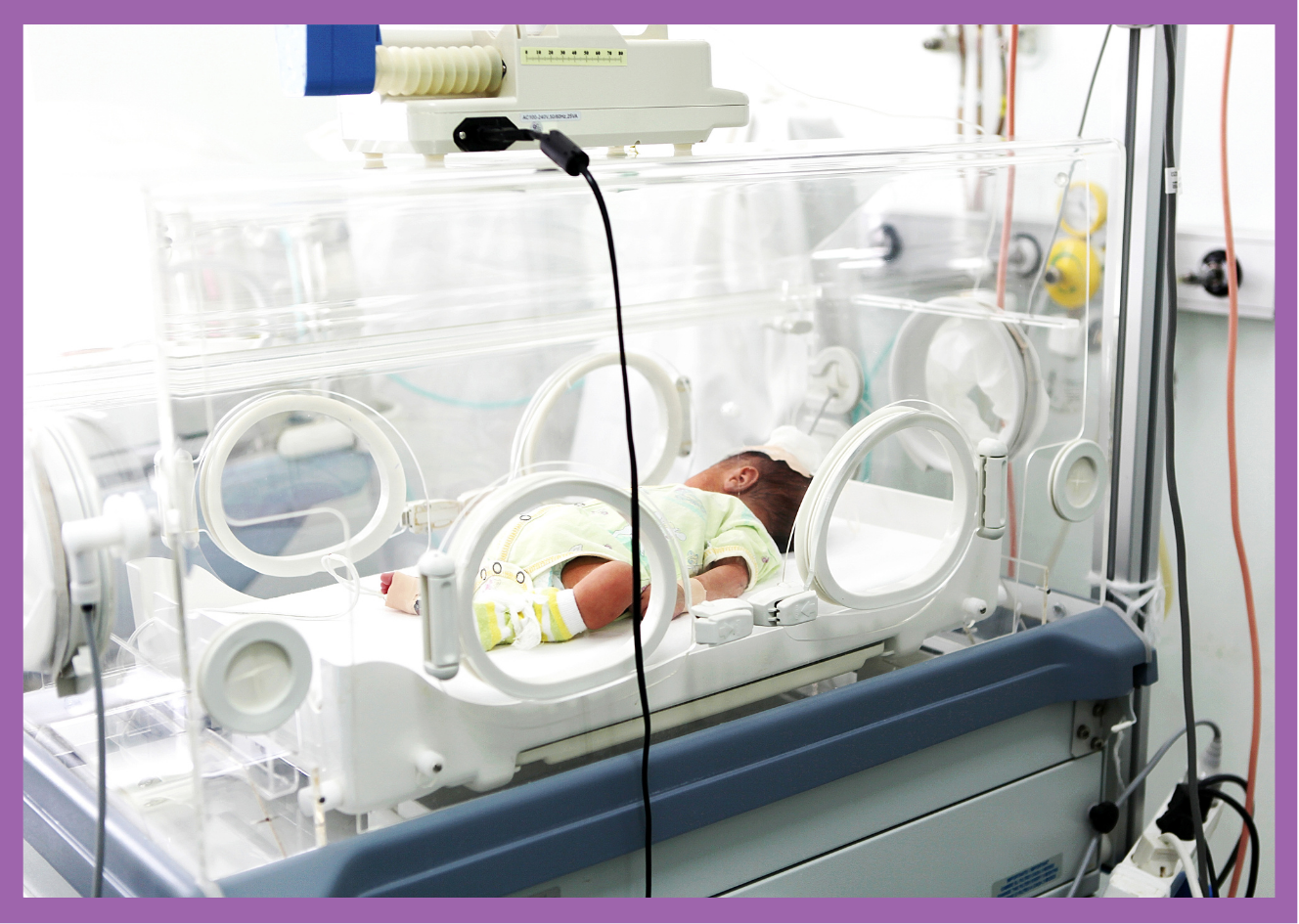
How does a humidicrib work?
A humidicrib works by creating a carefully controlled, womb-like environment that supports premature and unwell newborns who cannot regulate their own temperature or moisture levels.
Babies born before 30 weeks’ gestation are particularly vulnerable because their immature skin and limited fat stores make them highly susceptible to heat loss and transepidermal water loss.
The humidicrib maintains a stable, warm, and humid environment that reduces heat and fluid loss, helping to preserve body temperature, electrolyte balance, and skin integrity during the earliest and most vulnerable stages of life. This controlled environment promotes overall physiological stability and supports healthy development.
Its transparent, enclosed design allows healthcare professionals and parents to see the baby clearly while protecting them from draughts, excess noise, and airborne irritants. Access ports enable healthcare professionals to provide feeding, comfort, and medical care without significantly disrupting the internal conditions.
Many humidicribs can also accommodate oxygen delivery and respiratory support, forming part of the broader NICU equipment used to stabilise premature babies and support lung development.

Who needs a humidicrib?
A humidicrib is essential for newborns who require additional environmental support, particularly premature babies whose immature skin and organ systems make it difficult to maintain body temperature or prevent significant water loss.
Australian neonatal guidelines recommend that babies born before 30 weeks’ gestation be cared for in an incubator with controlled humidity to protect against transepidermal water loss and support stable temperature regulation during their earliest days of life.
Babies with a low birth weight may require similar support, as their reduced fat stores and fragile skin limit their ability to remain warm and hydrated independently.
Babies experiencing breathing difficulties or problems regulating their temperature may also benefit from the controlled, enclosed environment of a humidicrib. It protects them from external temperature fluctuations while allowing oxygen delivery and other medical interventions to be safely provided.
For these vulnerable newborns, the humidicrib can function as an “artificial womb”, providing warmth, protection, and stability until they are strong enough to transition to an open cot.
Benefits of a humidicrib
By maintaining a stable, warm, and humid environment, a humidicrib provides several important benefits for premature and unwell newborns.
It supports effective temperature regulation, reduces fluid loss in babies with underdeveloped skin barriers, and promotes physiological stability during a crucial stage of development. The ability to safely accommodate oxygen therapy and respiratory support can further enhance clinical care when needed.
Its enclosed yet accessible design also balances protection with visibility, enabling close monitoring and parental bonding while minimising environmental stressors that could interfere with recovery and growth.
Safety and monitoring
Safety in the NICU is maintained through continuous monitoring, ensuring that premature and unwell babies receive prompt attention as their condition changes.
Australian neonatal clinical guidelines emphasise the importance of regularly assessing each baby’s temperature, fluid balance, skin condition, and vital signs. Nursing staff perform routine checks and use specialised monitoring systems built into humidicribs and incubators.
NICUs also follow strict infection-control protocols. The enclosed design of the humidicrib helps protect vulnerable babies from airborne particles, draughts, and environmental contamination.
Humidicribs feature transparent enclosures with access ports, allowing healthcare professionals and parents to reach the baby for procedures, care, or comfort without exposing them to unnecessary environmental stress or pathogens.
The combination of continuous professional monitoring, protective equipment design, and controlled access helps ensure that babies in the NICU receive safe and supportive care during their most vulnerable days.
When do babies leave the humidicrib?
Babies transition from a humidicrib to an open cot once they reach key developmental milestones that show they can remain stable without additional environmental support.
As they grow, babies are gradually moved to an open cot when they can maintain a stable body temperature with reduced humidity and without additional heat support.
Weight is another important consideration. Many babies make the transition once they have gained enough body mass to retain warmth more effectively. Parents may notice this change as part of their baby’s increasing strength and readiness for greater independence.
Feeding progress can also play a role. Once babies are feeding more effectively, whether through breastfeeding or bottle-feeding, and showing consistent growth, they may be considered ready to leave the humidicrib.
Leaving the humidicrib is often a deeply emotional milestone for families. It signals a baby’s growing independence and resilience and marks a hopeful step towards going home. Many parents describe this moment as the first real glimpse of life beyond the NICU.
Cost and access in Australia
In Australia, humidicribs are standard equipment in both public and private hospitals. For eligible families accessing care through the public hospital system, the use of a humidicrib and associated NICU or special care nursery (SCN) treatment is covered by Medicare.
This means parents generally do not pay for hospital accommodation, medical procedures, specialist care, or equipment such as humidicribs. Medicare covers inpatient care, hospital facilities, doctors’ fees, and specialist services provided through the public system.
In private hospitals, humidicribs are also available, but costs depend on the family’s private health insurance. Medicare may contribute towards some medical fees, while hospital accommodation and equipment costs may be billed to the insurer or the family where gaps apply.
Through Australia’s public hospital system, humidicrib care remains accessible to eligible families, helping ensure that premature and unwell babies receive essential environmental support regardless of their family’s financial circumstances.
See FAQs Below
Get Involved
Run with us
Donate
Join the Premmie Marathon Challenge
FAQs
What is the difference between a humidicrib and an incubator?
While both provide a warm, protected environment, a humidicrib specifically controls humidity in addition to temperature. In Australia, the term "humidicrib" traditionally refers to incubators designed for premature babies to reduce fluid loss and support skin and temperature regulation, especially in the first weeks of life.
Why is humidity important for premature babies?
Humidity helps reduce water loss through the skin, which is especially critical in babies born before 30 weeks. High humidity supports temperature regulation, prevents dehydration, and protects delicate skin that hasn’t fully developed its barrier function.
Is the use of a humidicrib covered under Medicare in Australia?
Yes. In public hospitals across Australia, all NICU treatments, including humidicribs, are fully covered by Medicare. Families pay no out-of-pocket costs for equipment, care, or hospital stay when treated as public patients.

How Running for Premature Babies Helps Support NICUs, SCNs and Maternity Units
Running for Premature Babies plays a crucial role in supporting NICUs, SCNs and maternity units across Australia by providing vital equipment that gives sick and premature babies a better chance of survival.
As one of the country’s most impactful charitable foundations in neonatal care, the organisation has raised more than $12 million since 2007, enabling the donation of over 172 pieces of critical neonatal equipment, including humidicribs, monitors, ventilators and resuscitation cots, to hospitals nationwide. This equipment directly supports NICUs and SCNs in caring for extremely vulnerable newborns, helping to improve survival rates and long-term outcomes.
Running for Premature Babies also funds cutting-edge neonatal and perinatal research, helping to advance the care of premature infants and improve future treatment options.
Beyond funding, the charity raises awareness of prematurity and the immense demands on NICUs, highlighting the reality that 1 in 10 babies in Australia is born prematurely, with many requiring intensive care that can cost thousands of dollars per day. The charity celebrates all prematurely born children, both living and lost, with many supporters having lived experience of prematurity.
Through community running events and nationwide fundraising efforts, Running for Premature Babies empowers everyday Australians to make a tangible difference, helping hospitals provide the specialised care needed to give premature babies their best possible start in life.
You can read more about our impact here.
By giving today, you can help fund urgently needed neonatal equipment that supports hospitals and saves the lives of sick and premature babies. Give today and help fund urgently needed neonatal equipment that will save the lives of sick and premature babies.