

Placenta Previa
A Quick Guide
If you experience bleeding during your pregnancy, contact your midwife or doctor immediately. If the bleeding or pain are severe, call triple zero (000) and ask for an ambulance.
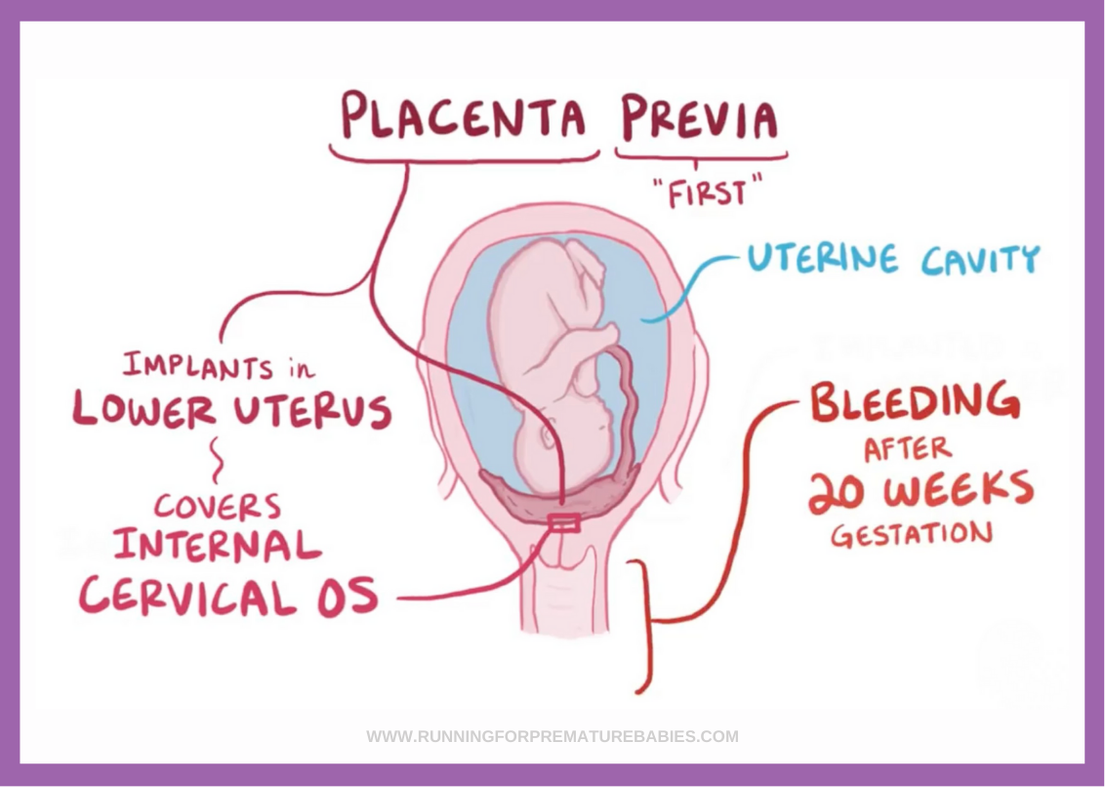
Bleeding during pregnancy can be a sign of a placental complication known as placenta praevia. This condition occurs when the placenta implants low in the uterus and may partially or completely block the cervix. In this guide, we cover the definition of placenta praevia, common symptoms, and how it’s managed.
What is Placenta Praevia?
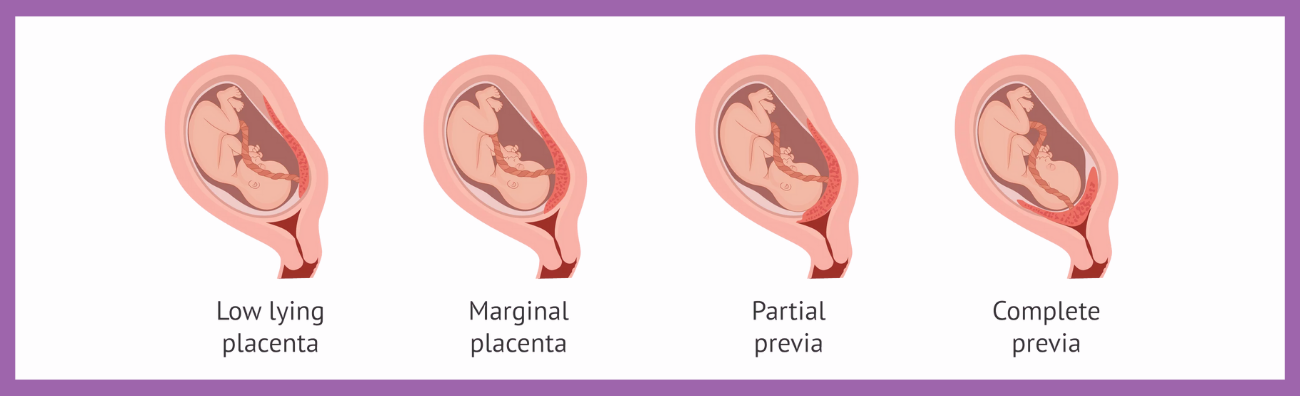
Placenta Praevia occurs when the placenta attaches close to or completely covers the cervix, making vaginal birth difficult or impossible. It is sometimes referred to as a low-lying placenta. It affects approximately 0.3 – 0.5% of pregnancies in Australia.
Placenta praevia is usually known about before labour begins, thanks to routine prenatal care and ultrasound scans.
Placenta praevia is typically diagnosed during the standard 18–20 week morphology ultrasound scan.
While often detected at 20 weeks, in about 90% of cases, the placenta moves upwards and away from the cervix as the uterus grows, resolving on its own by the third trimester.
If a low-lying placenta is found at the 20-week scan, follow-up scans are scheduled around 32 to 34 weeks to recheck its position.
Signs & Symptoms of Placentia Previa
Signs include vaginal bleeding after 28 weeks of pregnancy. Typical signs of placenta praevia include painless vaginal bleeding in the second or third trimester. Many individuals with minor placenta praevia may not experience symptoms until labour begins, whereas major placenta praevia can lead to heavier bleeding and delivery complications.
If confirmed near term, a scheduled Caesarean section is almost always planned to ensure the safety of the mother and baby.
Additional reference here:
Royal College of Obstetricians and Gynaecologists. Retrieved 9th April 2026 from https://www.rcog.org.uk/for-the-public/browse-our-patient-information/placenta-praevia-placenta-accreta-and-vasa-praevia/
This information has been reviewed by Neonatologist, Dr John Smyth MBChB, FRACP FRCPCH.
Disclaimer: This information by Running for Premature Babies Foundation is educational and informative in nature and is not medical advice or a healthcare recommendation. For further information, please Contact Us.
See FAQs Below
Get Involved
Run with us
Donate
Join the Premmie Marathon Challenge
FAQs
Is placenta previa dangerous for the baby?
BMJ Best Practice. Placenta Praevia. BMJ Best Practice. 2025. https://bestpractice.bmj.com/topics/en-gb/667. Retrieved 26 May 2025.
How is placenta previa diagnosed?
What are the treatment options for placenta previa?
Can I have a vaginal birth with placenta previa?

The vital role of research
Whilst relatively rare, research indicates placenta praevia cases are on the rise in correlation with increased caesareans. Charities such as Running For Premature Babies play a vital role in funding essential medical research, focused on pre- and post-natal care. Continued advancements in screening tools and ongoing research could significantly improve outcomes for mothers affected by placenta praevia, giving babies a better chance of survival.
At Running for Premature Babies, we are incredibly grateful for our dedicated community of fundraisers and volunteers. If you’d like to support research into preterm birth or complications like placenta praevia, including studies into the classification of placenta praevia, your donation can make a lasting impact. Help equip hospitals with essential NICU resources by donating here.
Healthdirect Australia. Pregnancy Birth and Baby, Placenta Praevia.
Retrieved 15th May 2025 from https://www.pregnancybirthbaby.org.au/placenta-praevia
Australian Institute of Health and Welfare. (2012). Maternal morbidity data in Australia: An assessment of the feasibility of standardised collection. AIHW. Retrieved 15th May 2025 from https://www.aihw.gov.au
Zhang, L., Bi, S., Du, L., et al. (2020). Effect of previous placenta previa on outcome of next pregnancy: A 10-year retrospective cohort study. BMC Pregnancy and Childbirth, 20(212). Retrieved 15th May 2025 from https://doi.org/10.1186/s12884-020-02890-3