

Understanding Preterm, Late Preterm, and Full Term Birth
Warning: If you experience bleeding during pregnancy, contact your midwife or doctor immediately. If the bleeding or pain is severe, call triple zero (000) and ask for an ambulance.
Bleeding during pregnancy can be a sign of a placental complication known as placenta praevia. This condition occurs when the placenta implants low in the uterus and may partially or completely block the cervix. In this guide, we cover the definition of placenta praevia, common symptoms, and how it is managed.
What is placenta praevia?
Placenta praevia occurs when the placenta attaches close to or completely covers the cervix, making vaginal birth difficult or impossible. It is sometimes referred to as a low-lying placenta. It affects approximately 0.3-0.5% of pregnancies in Australia.
Placenta praevia is usually identified before labour begins through routine prenatal care and ultrasound scans.
Placenta praevia is typically diagnosed during the standard 18-20 week morphology ultrasound scan.
While it is often detected at 20 weeks, in approximately 90% of cases the placenta moves upwards and away from the cervix as the uterus grows, resolving on its own by the third trimester.
If a low-lying placenta is found during the 20-week scan, follow-up scans are usually scheduled at around 32-34 weeks to recheck its position.

What Is Gestational Age?
Gestational age is measured from the first day of the pregnant person’s last menstrual period and can be refined through early ultrasound, which provides the most accurate estimate of how far along the pregnancy is.
Knowing this timing is vital for your baby’s health because foetal organs and body systems develop in a predictable sequence, and gestational age helps healthcare providers understand whether growth is on track, identify potential risks, and make decisions about monitoring or intervention.
It also guides care at birth, as babies born earlier may need additional support with breathing, feeding, or temperature regulation, while those born at full term are typically more developmentally prepared for life outside the womb.
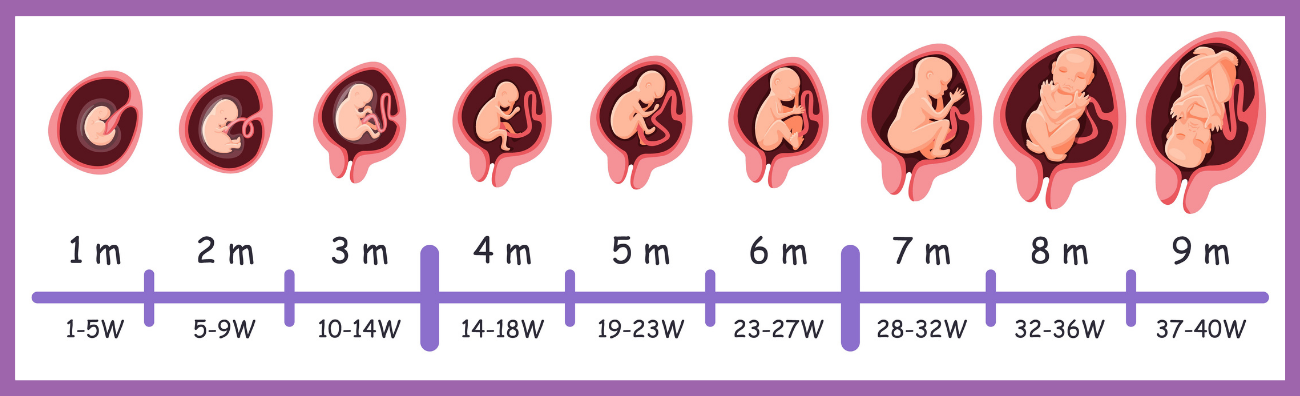
Preterm birth (before 37 weeks)
Babies born preterm are grouped into three categories based on how early they arrive:
- Extremely preterm: born before 28 weeks
- Very preterm: born between 28 and 32 weeks
- Moderate to late preterm: born between 32 and 37 weeks
Late preterm birth (34-36 weeks)
Late preterm babies born between 34 and 36 weeks often appear healthy and close to full-term size, but they can still have immature organs and systems that affect feeding, breathing, temperature regulation, and blood sugar stability.
As a result, they may face challenges such as difficulty latching or staying awake for feeds, jaundice, low blood sugar, or mild respiratory issues.
These babies often need extra monitoring, support with feeding, and help maintaining body temperature to safely transition to life outside the womb. Because they can look similar to full-term newborns, their additional needs are sometimes underestimated.
Australian neonatal guidelines highlight the importance of recognising late preterm birth as a distinct risk group, requiring tailored feeding plans, careful discharge planning, and follow-up to reduce avoidable readmissions.
Early term birth (37-38 weeks)
Early term babies born at 37-38 weeks are not considered fully mature because important fetal development continues until at least 39 weeks.
National data indicate that early term births are increasingly common in Australia. Babies born in this window have higher rates of short-term complications compared with those born at 39-40 weeks, including respiratory issues, feeding difficulties, hypoglycaemia, and higher rates of neonatal nursery admission.
Full-term birth (39-40 weeks)
Full-term birth at 39-40 weeks is considered ideal because research shows this timing gives babies the best start.
There are significantly lower rates of respiratory and feeding problems and fewer admissions to special care nurseries compared with births at 37-38 weeks.
Initiatives such as Every Week Counts emphasise that babies continue critical brain growth right up to 40 weeks, resulting in more mature brain function and improved early childhood outcomes.
Late-term birth (41 weeks)
When pregnancy extends into 41 weeks, clinicians increase monitoring to ensure the baby continues to receive enough oxygen and nutrients.
This typically includes twice-weekly cardiotocographs (CTGs) and amniotic fluid assessments to track fetal wellbeing and detect early signs of compromise.
At this stage, many hospitals begin discussing induction, as the risk of complications such as reduced placental function or low amniotic fluid starts to rise.
Most guidelines recommend planning a birth by 42 weeks unless there is a compelling reason to continue the pregnancy.
Post-term birth (42 weeks and beyond)
Post-term pregnancy, defined as 42 weeks or beyond, carries increasing risks because the placenta may no longer function as effectively.
This can reduce the baby’s oxygen and nutrient supply and increase the likelihood of complications such as stillbirth, low amniotic fluid, and the need for neonatal intensive care.
To manage these risks, doctors increase monitoring through regular CTGs, ultrasound checks, and fetal wellbeing assessments.
Induction of labour is commonly recommended at this stage, as evidence shows that delivery around 41-42 weeks is safer than continuing the pregnancy beyond this point.
Why these terms matter
Understanding gestational age categories matters because each stage carries different health implications for both mother and baby, influencing risks such as breathing difficulties, feeding problems, stillbirth, and the need for special care nursery support, which increase when birth occurs too early or too late.
These terms also guide clinical decision-making, helping families and healthcare providers know when closer monitoring, induction of labour, or expectant management is safest, particularly as risks rise beyond 41-42 weeks or when babies are born before full maturity at 39-40 weeks.
By understanding these categories, parents are better equipped to make informed choices and healthcare teams can tailor care to optimise outcomes.

See FAQs Below
Get Involved
Run with us
Donate
Join the Premmie Marathon Challenge
FAQs
What is the difference between preterm and late preterm birth?
Preterm birth refers to babies born before 37 weeks of pregnancy. Late preterm babies are born between 34 and 36 weeks and often look similar to full‑term newborns, but they still have immature organs and may need extra support with feeding, breathing, temperature regulation, and blood sugar stability.
Why is 39 weeks considered full term?
Research shows that important brain, lung, and metabolic development continues until at least 39 weeks. Babies born at 39–40 weeks have lower rates of breathing problems, feeding difficulties, and special care nursery admissions compared with those born earlier.
Yes. Babies born at 37–38 weeks (early term) have higher rates of short‑term complications such as respiratory distress, jaundice, and feeding difficulties compared with babies born at 39–40 weeks, even though they are classified as “term.”

How Running for Premature Babies Helps Support NICUs, SCNs and Maternity Units
Running for Premature Babies plays a crucial role in supporting NICUs, SCNs and maternity units across Australia by providing vital equipment that gives sick and premature babies a better chance of survival.
As one of the country’s most impactful charitable foundations in neonatal care, the organisation has raised more than $12 million since 2007, enabling the donation of over 172 pieces of critical neonatal equipment, including humidicribs, monitors, ventilators and resuscitation cots, to hospitals nationwide. This equipment directly supports NICUs and SCNs in caring for extremely vulnerable newborns, helping to improve survival rates and long-term outcomes.
Running for Premature Babies also funds cutting-edge neonatal and perinatal research, helping to advance the care of premature infants and improve future treatment options.
Beyond funding, the charity raises awareness of prematurity and the immense demands on NICUs, highlighting the reality that 1 in 10 babies in Australia is born prematurely, with many requiring intensive care that can cost thousands of dollars per day. The charity celebrates all prematurely born children, both living and lost, with many supporters having lived experience of prematurity.
Through community running events and nationwide fundraising efforts, Running for Premature Babies empowers everyday Australians to make a tangible difference, helping hospitals provide the specialised care needed to give premature babies their best possible start in life.
You can read more about our impact here.
By giving today, you can help fund urgently needed neonatal equipment that supports hospitals and saves the lives of sick and premature babies. Give today and help fund urgently needed neonatal equipment that will save the lives of sick and premature babies.
References