

NICU Monitoring Technology: A Parent's Guide to Monitors & Alarms
Understanding the monitoring technology used in the NICU can help parents feel more at ease during an otherwise overwhelming time.
As you begin to learn what each machine does and why it’s needed, the environment often feels less intimidating.
Instead of seeing beeps, wires, and screens as frightening, you can recognise them as tools that keep your baby safe, track their progress, and alert the care team the moment your little one needs extra support.
This knowledge not only reduces anxiety but also helps you feel more confident and connected in your baby’s care.
Why Continuous Monitoring Matter
|
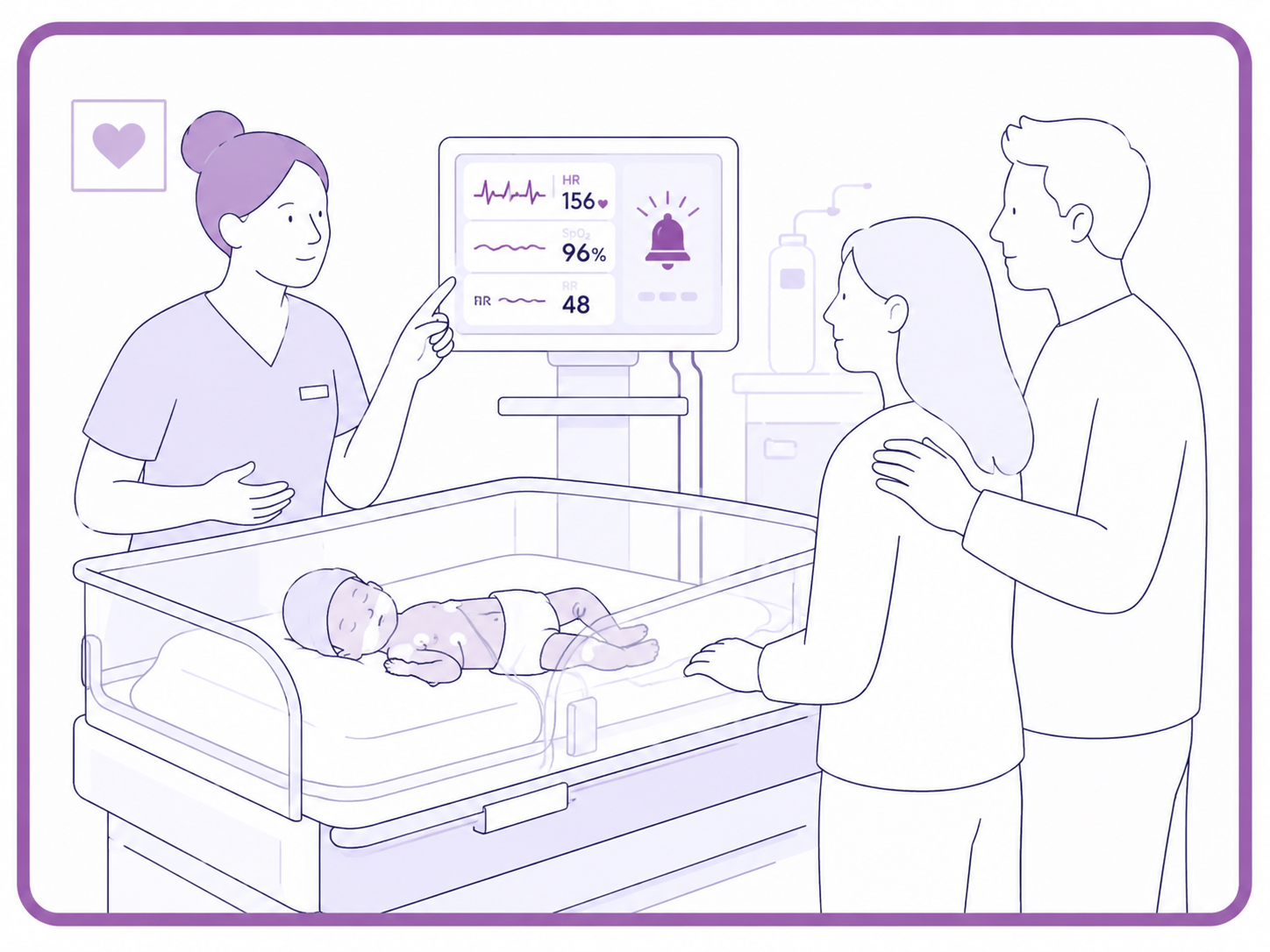
Continuous monitoring is essential in the NICU because premature babies have immature body systems that can change quickly and without warning. Their breathing, heart rate, and oxygen levels can fluctuate rapidly, and continuous tracking allows the care team to detect even the smallest shifts. Early identification of these changes means doctors and nurses can intervene faster, often preventing complications before they escalate. In this way, monitoring technology acts as a constant safety net, providing round-the-clock oversight and catching potential issues early. |

Heart rate monitoring is a vital part of NICU care, giving clinicians real-time insight into how a premature baby’s heart is functioning. Small ECG leads placed gently on the baby’s chest track their heart rhythm and rate continuously, displaying the information on a monitor so staff can respond to any changes right away.
For most premature babies, a normal heart rate typically falls between 120 and 160 beats per minute, though slight fluctuations are common.
When the monitor detects bradycardia, where the heart rate drops too low, or tachycardia, where the heart beats faster than normal, it triggers an alarm. These alerts don’t always signal an emergency, but they prompt nurses to check the baby quickly, ensuring that any potential issue is recognised and managed as early as possible.
Bradycardias are common in premature babies because their neurological and cardiac systems are still developing, particularly the part of the brain that regulates breathing and heart rhythm. Premature infants frequently experience apnoea of prematurity, where pauses in breathing lead to a reflex drop in heart rate. Bradycardia in premature babies typically means the heart rate falls below 100 beats per minute, often following shallow breathing or a brief apnoea episode.
These events are usually expected and self-resolving as the baby matures, but they become concerning when they occur frequently, are prolonged, or are associated with colour changes, poor oxygen levels, or difficulty self-recovering. In these cases, clinicians investigate other potential causes such as infection, low blood sugar, temperature instability, or underlying cardiac conditions, all of which neonatal teams assess as part of routine monitoring and care.
Oxygen Saturation (Pulse Oximetry)
Pulse oximetry is a key part of neonatal monitoring in NICUs, using a small sensor placed on a baby’s hand or foot to continuously measure the percentage of oxygen carried in the blood.
This non-invasive tool helps clinicians track changes in oxygen levels instantly and adjust care as needed. Australian neonatal guidelines highlight that premature babies often require carefully controlled oxygen targets, commonly around 90–95%, though each unit may set specific ranges. Both too little oxygen, known as hypoxaemia, and too much oxygen, known as hyperoxia, can cause serious harm, including lung injury.
Desaturation events, commonly called “desats”, occur when oxygen levels temporarily fall. These events are relatively common in preterm infants due to immature lungs and unstable breathing patterns. They can also be triggered by feeding, sleep state, or medical conditions.
Continuous monitoring allows the care team to detect these drops quickly and determine whether they are benign fluctuations or signs of deterioration requiring intervention.
Respiratory Rate Monitoring
Respiratory rate monitoring is an essential part of caring for premature babies in NICUs, where specialised sensors track each breath the infant takes to detect even subtle changes in their breathing pattern.
Normal respiratory rates for preterm infants generally fall between 40 and 60 breaths per minute, according to neonatal monitoring guidelines used across major Australian units.
Apnoea alarms are triggered when a baby pauses breathing beyond a safe time threshold, prompting staff to assess and stimulate the infant if needed. These breathing pauses often connect closely with episodes of bradycardia, which is a slowing heart rate, and oxygen desaturation. This cluster of events is commonly referred to as the “A’s and B’s” in neonatal care.
Apnoea in preterm babies is usually due to immaturity of the brain’s breathing centre and may be followed by bradycardia and drops in oxygen levels. All of these are monitored continuously so clinicians can intervene early and keep the baby stable.
Blood Pressure Monitoring
Blood pressure helps clinicians assess how well a premature or unwell baby is circulating blood to vital organs.
In many cases, blood pressure is checked non-invasively using a small cuff placed on the arm or leg, an approach suitable for stable infants. For sicker or extremely premature babies who need continuous and highly accurate readings, clinicians may use an arterial line, which allows real-time monitoring and blood sampling.
According to neonatal monitoring guidelines used across Australian services, blood pressure is recorded alongside other vital signs to detect early signs of deterioration. Low readings may indicate issues such as infection, poor cardiac output, or dehydration, while high readings can suggest pain, stress, or more serious underlying conditions.
Blood pressure assessment is also important during clinical reviews, ensuring abnormalities are identified and managed quickly.
Temperature Monitoring
For temperature monitoring in NICUs, medical teams usually use tiny sensors placed on the baby’s skin and linked to an incubator or radiant warmer. These continuously track body temperature to ensure it stays within a safe range.
Premature babies lose heat quickly because they have thin skin, little body fat, and immature temperature-regulation systems, making them highly vulnerable to both hypothermia and overheating.
Guidelines emphasise that maintaining a stable temperature is critical for reducing metabolic stress and preventing complications, with normal ranges typically kept between 36.5°C and 37.4°C in NICU settings.
Automated temperature probes help incubators adjust heat output moment by moment, ensuring consistent warmth while allowing clinicians to focus on the infant’s broader medical needs.
Brain Monitoring (aEEG and NIRS)
Brain monitoring in the NICU uses specialised tools to give clinicians real-time insight into how a premature or unwell baby’s brain is functioning and whether it is receiving enough oxygen.
Amplitude-integrated EEG, known as aEEG, provides a simplified, continuous tracing of brain activity. It is commonly used in neonatal units to assess the brain’s functional integrity, detect seizures, and monitor at-risk infants, such as very premature babies or those recovering from complications like hypoxia, or low oxygen levels.
Near-infrared spectroscopy, known as NIRS, complements this by measuring how well oxygen is being delivered to the brain. Recent neonatal studies indicate NIRS can help maintain more stable brain oxygen levels in extremely preterm infants, supporting early interventions that may reduce the risk of brain injury.
Together, aEEG and NIRS are used for the tiniest and most vulnerable babies because their developing brains are at higher risk of instability. Early detection of changes allows clinicians to respond quickly to protect long-term neurological outcomes.
Understanding Alarms
Modern NICU monitoring technology is designed to keep premature babies as safe as possible, but it can also feel overwhelming for parents, especially when alarms seem to sound constantly.
In many cases, these alarms signal minor or expected fluctuations rather than emergencies, and nurses are trained to quickly assess which alerts require immediate action and which are simply routine.
Australian NICUs continue to improve how alarms are managed to reduce unnecessary noise. Research shows that nurses’ clinical experience and clear alarm-management protocols improve their ability to distinguish between nuisance alarms and those needing urgent intervention, supporting calmer, more confident care at the bedside.
For parents, understanding that most alarms are protective and that staff are trained to interpret them accurately can help ease anxiety during the NICU journey.
The Wires and Leads: What’s Attached to Your Baby
In the NICU, your baby may be connected to several small monitors that help the care team keep track of their vital signs. ECG leads gently stick to your baby’s chest to measure heart activity, a soft pulse oximeter wraps around a hand or foot to monitor oxygen levels, and a tiny temperature probe helps ensure they stay warm and stable.
Even with these wires and sensors, you can still hold and touch your baby safely. Nurses will show you how to work around the cables so you can enjoy skin-to-skin time or comforting hand-holds without disturbing any equipment.
Over time, one of the most uplifting milestones is seeing these leads gradually removed as your baby grows stronger and needs less monitoring, offering a powerful visual reminder of their progress.
Advances in NICU Monitoring Technology
Advances in NICU monitoring technology are rapidly transforming care for premature and unwell newborns, with Australian units embracing innovations that reduce cable clutter, improve accuracy, and support family-centred care.
Research into next-generation wireless and non-contact monitoring systems, such as radar-based respiratory tracking, infrared thermography for temperature assessment, and camera-based vital-sign extraction, shows these tools can significantly reduce the need for traditional wired sensors, making the NICU environment less intrusive and more comfortable for fragile infants.
These technologies also help minimise skin irritation and allow easier parental interaction, an important benefit in the neonatal setting.
These advances, supported by research and health-system innovation funding, are driving a future where monitoring is both more precise and less disruptive for babies and their families.
How Running for Premature Babies Supports Monitoring Equipment in NICUs
Running for Premature Babies supports NICUs across Australia by directly funding life-saving neonatal technology and monitoring equipment for hospitals in need.
Our charity has donated more than 1,700 pieces of neonatal equipment nationwide and continues to channel community-raised funds into essential monitoring tools, such as ECG machines.
We extend our support to regional and rural neonatal units, ensuring that hospitals outside major cities can still access advanced monitoring technology that improves survival and long-term outcomes for vulnerable infants.
Every donation helps bridge the gap in equipment availability and gives premature babies across Australia a better chance of survival.
What NICU monitors track
| What's Monitored | Normal Range | What Triggers an Alarm |
|---|---|---|
| Heart rate | 120–160 bpm | Bradycardia (too low) or tachycardia (too high) |
| Oxygen saturation | Approximately 90–95% | Desaturation (“desats”): oxygen drops below the target range |
| Respiratory rate | 40–60 breaths per minute | Apnoea: a pause in breathing beyond the safe threshold |
| Temperature | 36.5–37.4°C | Too cool (hypothermia) or too warm |
| Blood pressure | Varies according to age and weight | Low readings may indicate infection or poor circulation, while high readings may indicate pain or stress |
These ranges are general guides. Each baby’s care team may set individual monitoring and alarm limits based on their gestational age, weight, condition, and treatment needs.
See FAQs Below
Get Involved
Run with us
Donate
Join the Premmie Marathon Challenge
FAQs
What do the monitors and alarms in the NICU mean?
In the NICU, monitors communicate vital signs to the medical team who can respond quickly when something changes. Although the beeps can feel alarming, most are not emergencies. Here’s what the main monitors mean:
Heart Rate
The heart rate monitor tracks how fast your baby’s heart is beating. Many brief changes are common in preterm babies and usually resolve on their own. Normal range around 120–160 beats per minute for premature babies.
Alarms may sound if:
-
The heart rate goes too low (bradycardia)
-
The heart rate goes too high (tachycardia)
Breathing (Respiratory Rate & Apnoea Alarms)
Monitors detect each breath your baby takes. Normal breathing rate is typically 40–60 breaths per minute. Apnoea alarms sound when there is a pause in breathing and gentle stimulation is often all that’s needed to help breathing resume.
Temperature
A small temperature probe helps ensure your baby stays within a safe range. Target temperature usually sits at 36.5–37.4°C. Alarms alert staff if your baby becomes too cool or too warm and incubators or humidicribs automatically adjust heat to maintain stability.
Oxygen Saturation (Pulse Oximetry)
This measures how much oxygen is in your baby’s blood. A sensor on the hand or foot tracks oxygen levels. Target ranges are set individually for each baby.
Why do NICU alarms go off so often. Should I be worried?
Think of monitors and alarms as a safety net, not necessarily a sign that something bad is happening. The alarms may go off because:
- Babies move a lot
- Sensors can loosen
- Premature babies’ vital signs naturally fluctuate
- Alarms are set very sensitively to catch changes early
NICU staff are experts at quickly recognising which alarms need action and which are routine. Over time, you may notice alarms decreasing as your baby grows stronger, and eventually, wires and monitors start coming off, which is a milestone worth celebrating.
What kinds of monitoring equipment are attached to my baby?
These are the main monitoring systems used in the NICU, with further details explained above.
-
Heart Rate Monitoring
-
Oxygen Saturation (Pulse Oximetry) Monitoring
-
Respiratory Rate Monitoring
-
Blood Pressure Monitoring
-
Temperature Monitoring
-
Brain Monitoring (aEEG and NIRS)

How Running for Premature Babies Helps Support NICUs, SCNs and maternity unit
Running for Premature Babies plays a crucial role in supporting NICUs, SCNs and maternity units across Australia by providing the vital equipment that gives sick and premature babies a better chance of survival.
As one of the country’s most impactful charitable foundations in neonatal care, the organisation has raised more than $12 million since 2007, enabling the donation of over 172 pieces of critical neonatal equipment - including humidicribs, monitors, ventilators & resuscitation cots - to hospitals nationwide. This equipment directly supports NICUs and SCNs in caring for extremely vulnerable newborns, helping to improve survival rates and long-term outcomes.
Running for Premature Babies also funds cutting edge neonatal and perinatal research, helping advance the care of premature infants and improve future treatment options.
Beyond funding, the charity raises awareness of prematurity and the immense demands on NICUs, highlighting the reality that 1 in 10 babies in Australia is born prematurely, many requiring intensive care that can cost thousands of dollars per day. The charity celebrates all prematurely born children, both living and lost, with many supporters having lived experience of prematurity.
Through community running events and nationwide fundraising efforts, Running for Premature Babies empowers everyday Australians to make a tangible difference, helping hospitals provide the specialised care needed to give premature babies their best possible start in life.
You can read more about our impact here.
By giving today, you can help fund urgently needed neonatal equipment that supports hospitals and saves the lives of sick and premature babies. Give today and help fund urgently needed neonatal equipment that will save the lives of sick and premature babies.
https://cahs.health.wa.gov.au/~/media/HSPs/CAHS/Documents/Health-Professionals/Neonatology-guidelines/Monitoring-Observation-and-Measurement-Frequency.pdf
Retrieved 26th March 2026
https://www.slhd.nsw.gov.au/rpa/neonatal/protocols.html
Retrieved 26th March 2026
https://www.seslhd.health.nsw.gov.au/sites/default/files/groups/Royal_Hospital_for_Women/Neonatal/Nursing/NCCdeterioratingneonate-recogandmanage2021.pdf
Retrieved 26th March 2026
https://www.tga.gov.au/products/medical-devices/monitoring-and-compliance/medical-device-post-market-reviews/post-market-review-neonatal-incubators
Retrieved 26th March 2026
https://www.rch.org.au/rchcpg/hospital_clinical_guideline_index/Continuous_Positive_Airway_Pressure_(CPAP)_-Care_in_the_Newborn_Intensive_Care_Unit(Butterfly_Ward)/
Retrieved 26th March 2026
https://resources.schn.health.nsw.gov.au/policies/policies/pdf/2007-0006.pdf
Retrieved 26th March 2026
https://resources.schn.health.nsw.gov.au/policies/policies/pdf/2008-0018.pdf
Retrieved 26th March 2026
https://www.australiancriticalcare.com/article/S1036-7314(24)00180-2/abstract
Retrieved 26th March 2026
https://doi.org/10.1038/s41390-025-04469-0
Retrieved 26th March 202