

Bonding With Your Premmie Baby
Bonding with a premature baby can feel more complex than expected, simply because early arrival often brings medical interventions, separation and an environment that can make connection feel harder to establish. Yet despite these challenges, early bonding is important for both baby and parent. Gentle touch, voice and early connection support a premmie’s emotional regulation, brain development and sense of safety, while also helping parents build confidence and strengthen their own emotional wellbeing during a vulnerable time.
This article explores the many ways bonding can unfold throughout a premature baby’s journey, from hospital-based practices like skin-to-skin care and involvement in daily routines to meaningful connection once your baby is home.
It also highlights the emotional supports available to families, helping parents feel empowered and deeply connected every step of the way.
Why Bonding Is So Important for Premmies
Bonding is particularly important for premature babies because it nurtures their emotional, neurological and physical development at a time when they are most vulnerable.
Early connection through touch, voice and presence helps stimulate healthy brain growth, supports emotional security and strengthens the foundations of long-term development.
This closeness also has powerful physiological benefits. A parent’s touch and rhythmic breathing can help stabilise a premmie’s temperature, heart rate and oxygen levels.
Just as importantly, bonding strengthens the parent-child attachment that can feel disrupted by the necessary separation of NICU care. Creating intentional moments of connection helps parents feel more confident, involved and emotionally grounded, while giving their baby the reassurance and stability they need to thrive.
Barriers to Bonding in the NICU
Bonding in the NICU can be challenging for parents of premature babies because the environment often creates unavoidable physical and emotional barriers. Physical separation is one of the biggest hurdles. Incubators, monitors, breathing equipment and infection-control procedures can all limit how close a parent can get, especially in the early days when a baby may be too fragile to be held.
These barriers can also leave parents feeling overwhelmed or fearful of touching their baby, worrying that they might cause discomfort or interrupt medical care. This emotional stress is common and can make bonding feel more difficult at a time when parents deeply want to connect.
In addition, early opportunities for physical contact, such as cuddling or skin-to-skin care, may be limited until the medical team determines that a baby is stable enough.
Despite these barriers, NICU teams work closely with families to create meaningful moments of connection, knowing that bonding remains essential for a baby’s development and the parent-child relationship.

Practical Ways to Bond in Hospital
Bonding with your premature baby in hospital is not only possible but deeply beneficial, even when medical equipment or incubators limit physical closeness. Simple interactions like talking, reading or singing to your baby help them learn your voice, feel secure and begin building early communication pathways.
Gentle touch is another powerful tool. Practices such as containment holds, cupping your baby’s feet or hands, or offering a soft scent cloth can help your baby feel settled, supported and connected while respecting their sensitivity to stimulation.
NICU developmental care guidance also highlights the value of parent involvement in daily routines, such as participating in nappy changes, temperature checks, feeding preparation or quiet caregiving moments.
These small but meaningful interactions create a foundation of comfort and familiarity, helping your baby feel loved while supporting their emotional and neurological development throughout their hospital stay.
The Role of Skin-to-Skin Contact
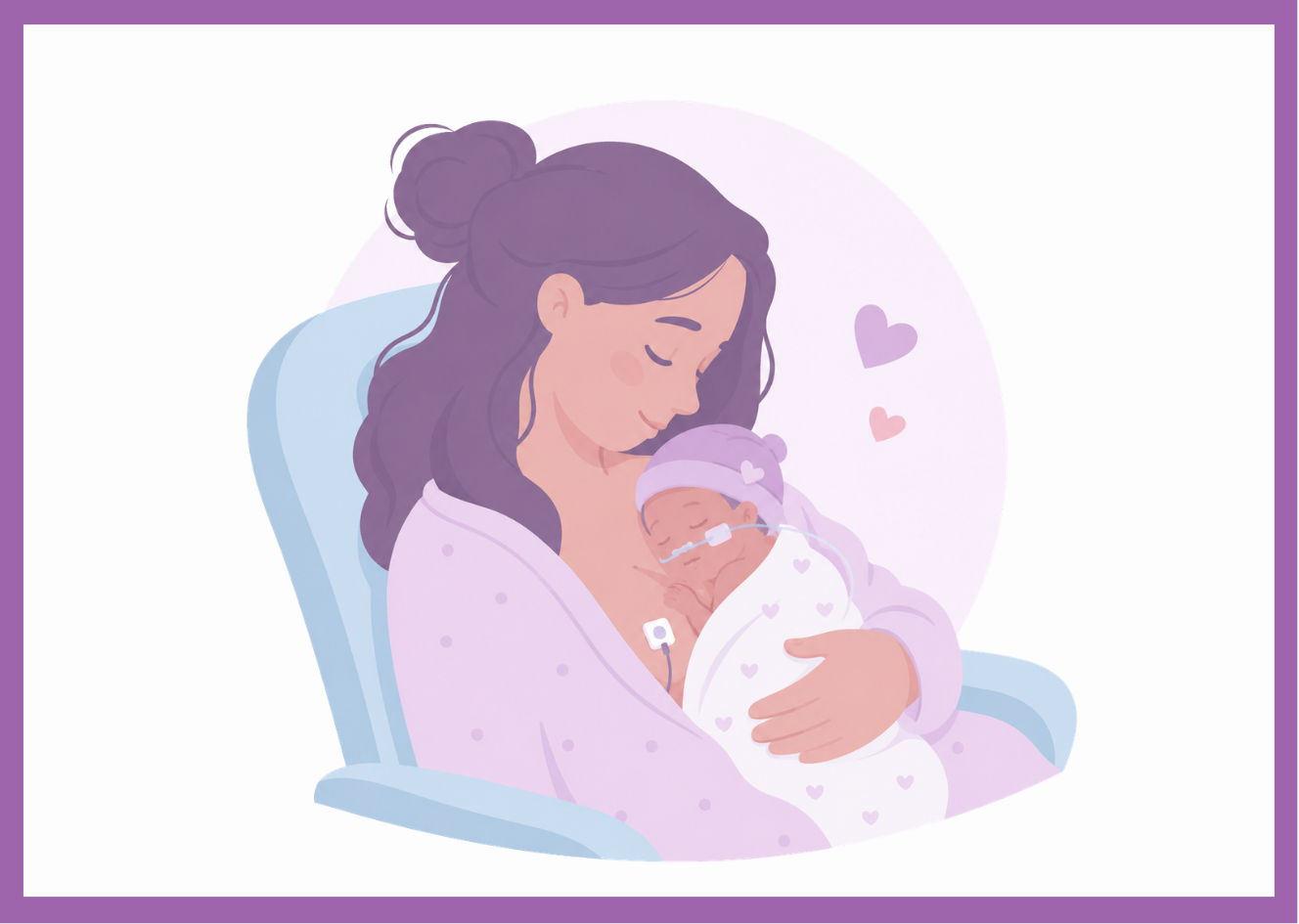
Holding a premature baby skin-to-skin on a parent’s chest, known as kangaroo care, is one of the most powerful and evidence-based ways to support a premmie’s health and development in the NICU.
Research shows that skin-to-skin contact can improve oxygenation, stabilise breathing and heart rate, support temperature regulation and enhance overall physiological stability. This makes it especially valuable for premature infants whose systems are still developing.
This close contact can also support earlier and more successful breastfeeding by helping regulate feeding cues and boost milk production. It strengthens bonding by reducing stress responses in both the baby and the parent.
In most NICUs, kangaroo care is introduced as soon as a premmie is medically stable, with nurses guiding parents on safe positioning, monitoring and duration to ensure the experience is calming rather than overstimulating.
Kangaroo care is not limited to mothers. Both parents can participate, offering equal opportunities to bond, help regulate their baby’s vital signs and build confidence.
How Can Dads and Partners Bond with a NICU Baby?
Expressing breast milk can become a powerful form of connection for parents of premature babies, especially during times when direct feeding or physical closeness is limited in the NICU.
Many parents describe expressing milk as a way to feel emotionally involved and actively contribute to their baby’s care, even when their premmie is too small or unwell to breastfeed directly. Providing expressed milk not only offers vital nutrition for premature infants but can also help parents feel useful, grounded and connected during an otherwise overwhelming time.
Establishing a steady milk supply often requires early and frequent expressing. Lactation specialists may recommend beginning soon after birth and maintaining regular sessions to build and protect long-term supply. For many NICU families, staying motivated involves support from lactation consultants, access to high-quality pumps and an understanding that progress may come slowly but steadily.
Even when a premature baby cannot yet latch, expressed breast milk can still be used in several meaningful ways, from tube feeding to oral colostrum care, ensuring the baby benefits from its protective properties before direct breastfeeding becomes possible.
How Do I Bond With My Premature Baby After Coming Home From NICU?
Partners play an equally important role in bonding with a premature baby, and inclusive opportunities in the NICU help strengthen the whole family’s connection. Bonding develops through simple, consistent interactions that non-birthing parents can fully participate in, even when medical equipment limits early contact.
Talking, reading or singing to the baby allows partners to share their voice and presence, helping the baby feel secure while learning to recognise their parent’s unique sound. When the baby is stable enough, partners can also participate in gentle touch or skin-to-skin sessions, which may help calm and regulate the baby’s breathing, temperature and heart rate while providing emotional benefits for both parent and infant.
Supporting the birthing parent, whether by taking turns at the bedside, helping with care routines or simply being present, can also strengthen the partner’s bond with the baby and reinforce their sense of involvement and confidence. Both parents’ presence and caregiving are valuable, making partner bonding an important part of a premmie’s early development.
Post-Discharge Bonding at Home
After leaving the NICU, continuing to build and deepen your bond with your premature baby is an important part of their ongoing emotional and developmental growth.
Many of the connection-based practices supported in hospital, such as talking, singing, gentle touch and skin-to-skin contact, can be continued at home, helping your baby feel secure and connected as they transition out of intensive care.
Babywearing, safe sleep practices recommended by your healthcare team and responsive caregiving can further strengthen this bond by keeping your baby close and helping you respond to their cues.
Learning to observe your baby’s body language and engaging in simple interactive play can support their communication, sensory development and emerging social skills. As bonding continues to evolve after discharge, it is important for parents to seek follow-up support if challenges arise.
Bonding takes time and may unfold differently for every family.
Emotional Wellbeing for Parents
Caring for a premature baby often brings a complex mix of emotions. Feelings such as guilt, grief, worry or delayed bonding are far more common than many parents realise. The NICU environment, combined with unexpected separation and medical uncertainty, can make it harder to feel confident or connected in the early days. These emotional reactions are normal and can be managed with the right support.
Parents are encouraged to reach out to NICU social workers, psychologists or specialised support services. These professionals can help families navigate emotional strain, understand their baby’s cues and rebuild confidence during this challenging time.
Alongside professional support, celebrating small milestones, such as a stable feed, a successful cuddle or a new behaviour, helps parents recognise the progress they and their baby are making. These small wins can strengthen the parent-child bond and remind families of their resilience, offering hope and motivation throughout the journey home and beyond.
How Fundraising Helps Parents Bond
Running for Premature Babies plays a meaningful role in strengthening the bonding experience for families by funding essential resources that make closeness possible in the NICU.
Donations contribute to specialised NICU recliner chairs that support longer and more comfortable kangaroo care sessions.
Funds also help provide counselling services and parent support programs that address the emotional challenges many families face, reinforcing parents’ confidence and emotional wellbeing.
Because parent bonding is closely linked to improved developmental and emotional outcomes for premature babies, supporting these experiences is an essential part of improving NICU care overall.
Running for Premature Babies helps more families access the tools, environments and emotional support needed to feel close to their baby from the very beginning. Through every step, every race and every donation, we help create the conditions where love and connection can thrive.
See FAQs Below
Get Involved
Run with us
Donate
Join the Premmie Marathon Challenge
FAQs
How can I bond with my premature baby when they’re in the NICU?
You can still bond closely with your premature baby in the NICU, even when medical equipment and separation make it hard. Simple, soothing interactions like talking, singing, or reading to your baby help them learn your voice and feel safe, even through the incubator walls. Gentle, steady touch, such as holding their hand, offering a containment hold, or placing your hands softly around their body, can help them feel calm and supported. When your baby is medically stable, skin‑to‑skin (kangaroo care) is one of the most powerful ways to bond, supporting both emotional closeness and your baby’s physiological regulation.
Is it normal to feel like I’m not bonding with my premmie?
It is completely normal to feel like you’re not bonding with your premature baby. The environment itself - full of machines, alarms, and necessary medical separation - can make bonding feel delayed or different from what you expected. Many parents report feeling disconnected or unsure how to connect.
The important thing to remember is that bonding is a process, not a moment, and in the NICU, it often unfolds more slowly. As you get to know your baby’s cues, begin gentle interactions, and become more comfortable in the NICU setting, many parents find their connection strengthens naturally over time. Remember, support teams are there to help you navigate these feelings and build confidence.
Feeling this way doesn’t mean you’re doing anything wrong, it means you’re human, and your relationship with your baby is still growing, at its own pace.
How do I bond if I feel scared to touch my premmie?
Feeling scared to touch your premature baby is incredibly common, especially when they are surrounded by wires, tubes, and monitors. Many parents worry that their baby is too fragile or that even gentle contact might cause harm.
The NICU care team is there to guide you in safe, developmentally supportive ways to begin bonding with your baby. Using gentle, steady forms of contact - such as containment holds - allows you to place your hands around your baby’s body to provide still, reassuring pressure.

How Running for Premature Babies Helps Support NICUs, SCNs and Maternity Units
Running for Premature Babies is one of Australia’s leading charities, funding essential equipment for NICUs, special care nurseries and maternity units to give sick and premature babies the best possible chance of survival.
Since 2007, our charity has raised millions in donations to provide critical neonatal equipment to hospitals nationwide, including humidicribs, monitors, ventilators, and resuscitation cots. We also invest in cutting edge research to advance the treatment options for premature infants. You can read more about our impact here.
Beyond funding, we raise awareness of prematurity and the immense demands on NICUs, highlighting the reality that 1 in 10 babies in Australia is born prematurely. Our charity celebrates all prematurely born children, both living and lost, with many supporters having lived experience of prematurity.
Through community running events and nationwide fundraising, Running for Premature Babies empowers everyday Australians to make a tangible difference to give premature babies their best possible start in life.
Give today and help fund urgently needed neonatal equipment and research that save the lives of sick and premature babies.