

Dressing & Holding a NICU Baby
Dressing and holding your premature baby in the NICU may look and feel very different from what you imagined, but these moments can also become some of the most meaningful parts of your early bonding with your little one. Even with the presence of monitors, tubes and medical routines, the simple act of choosing an outfit or gently holding your baby can be deeply emotional and empowering, giving parents an opportunity to participate more actively in their baby’s care.
This guide explains when and how parents can safely dress and hold their NICU baby, offering reassurance, practical tips and understanding as you navigate these early and precious experiences.
At What Gestational Age Can Premature Babies Wear Clothes?
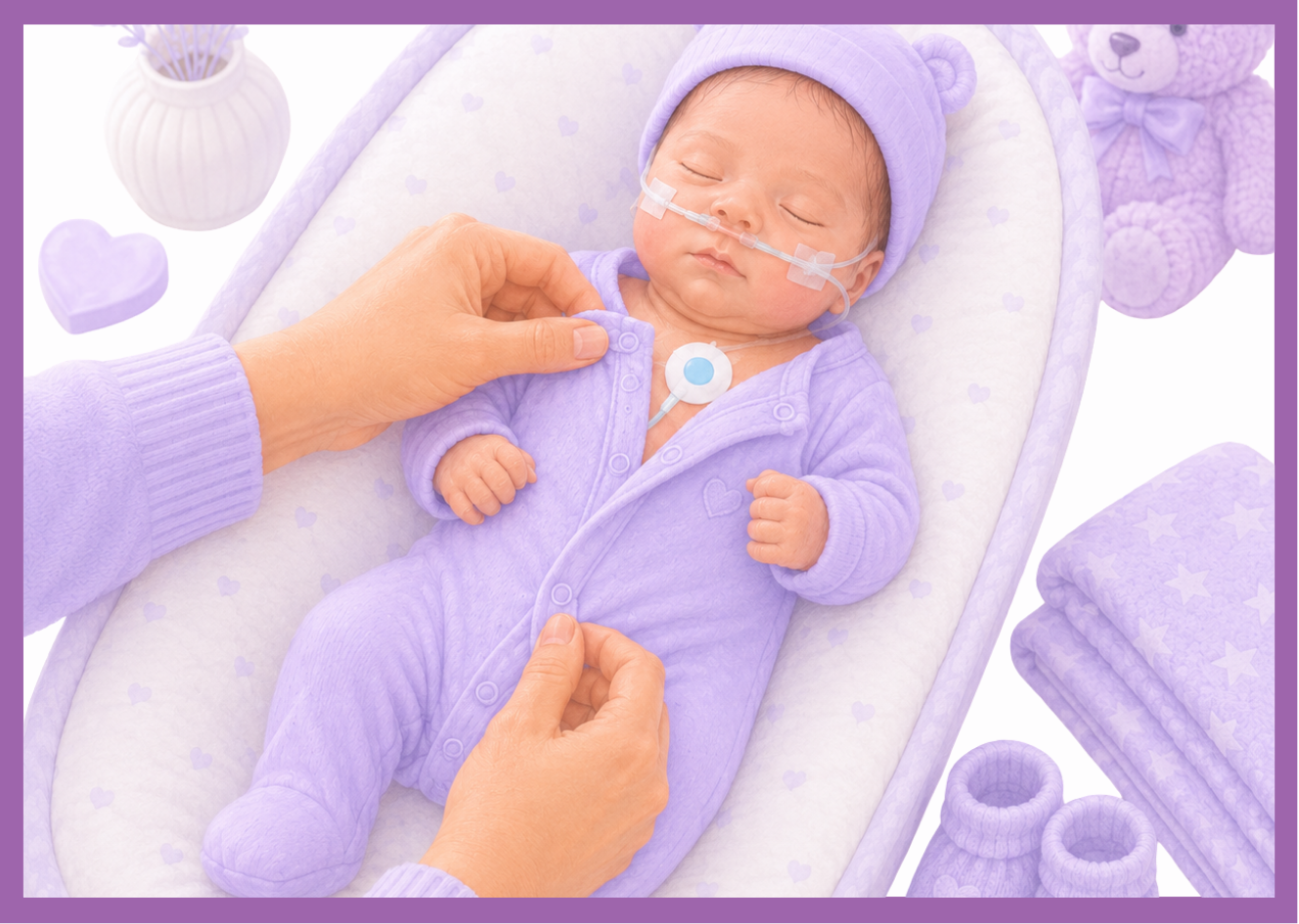
Once a premature baby is medically stable, clothing is usually introduced at around 32–34 weeks of gestational age, when babies are better able to maintain their body temperature and require less intensive monitoring.
This timing can vary because medical considerations, such as ongoing breathing support, the presence of IV or umbilical lines and a baby’s ability to regulate heat, all influence when clothing can be introduced safely. Premature babies have immature thermoregulation and a higher risk of heat loss, so maintaining a stable thermal environment is essential before adding clothing.
Because of these factors, decisions about when a premmie can be dressed are always guided by NICU nurses and doctors, who assess medical stability, equipment needs and temperature control on a case-by-case basis.
What Kind of Clothes Can a Premature Baby Wear in the NICU?
Choosing the right clothing for a NICU baby means focusing on comfort, safety and practicality while accommodating the medical equipment your premature baby may still depend on.
NICU-friendly outfits are usually made from soft, breathable fabrics and designed with front-opening panels, snap closures or wrap-style fastenings so nurses and parents can dress the baby without disturbing monitors, feeding tubes or IV lines. Popular options include kimono-style onesies, which open fully for easy access, footless suits that allow staff to check leads or monitor cords and premature-sized beanies that provide gentle warmth.
Clothing that provides easy access is especially important in NICU settings, where babies may tire easily or require frequent checks.
By choosing items that balance softness, convenience and safety, parents can help create a nurturing and comfortable environment for their baby while supporting the work of the NICU team.
Tips for Dressing a Fragile Baby
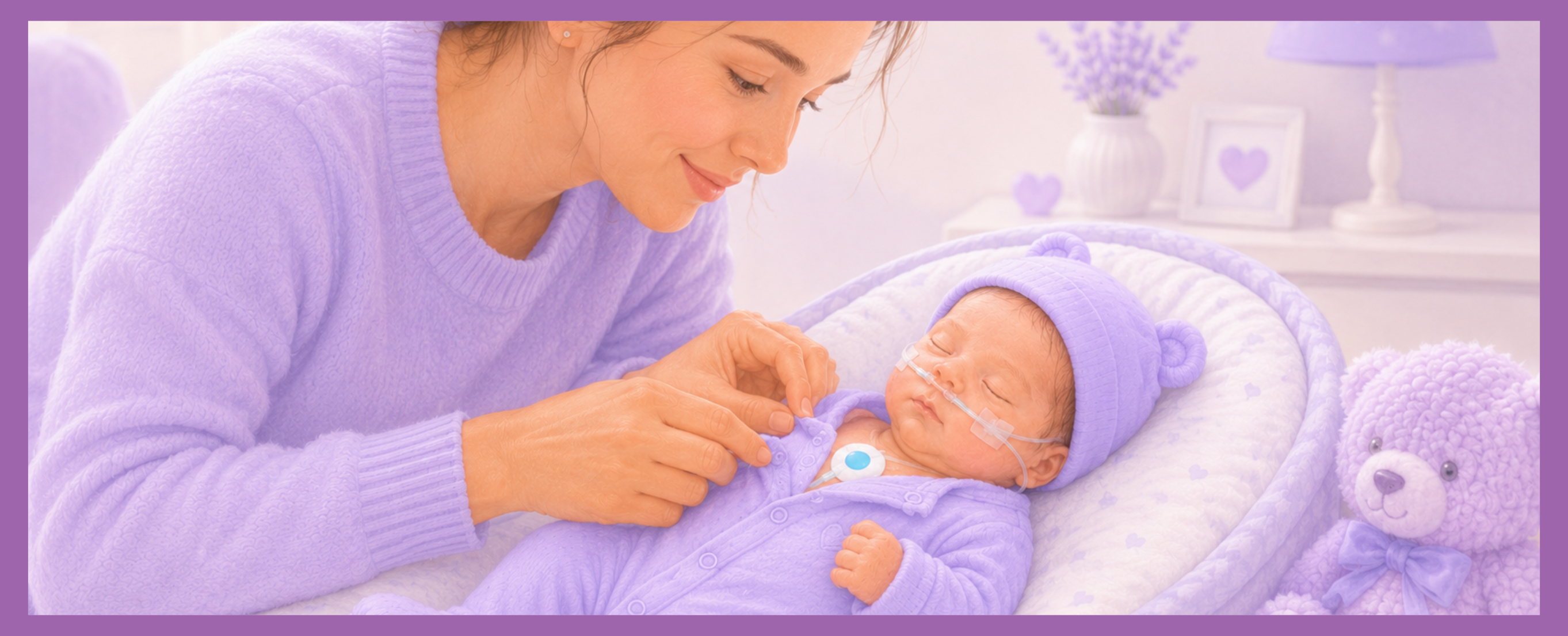
Dressing a fragile baby, especially in the NICU, can feel daunting, but parents and carers are supported, educated and gradually guided to take part in their baby’s care with confidence.
As a parent, you will receive guidance tailored to your baby’s individual needs. The following general step-by-step guide can help you understand how dressing a baby in the NICU may be approached:
- Prepare the Environment:
- Wash and dry your hands thoroughly
- Check your baby’s wires, tubes and monitoring leads. Ask your nurse to explain what each line does, as this can help build confidence and support safe handling
- Gather the clothing you will need. Choose soft, front-opening garments that minimise lifting and pulling, and ensure they fit comfortably around any monitoring equipment
- Start With the Clothing:
- Fully open the garment by unbuttoning, unsnapping or unzipping the front. This reduces the need to lift your baby excessively
- Lay the garment flat so you can gently position your baby on top of it rather than pulling clothing over their head
- Position Your Baby Safely:
- Ask a nurse to assist with managing lines and equipment, especially during the first few attempts
- Lift your baby slowly using “containment hands”, with one hand supporting the head and torso and the other gently cupping the hips to keep the body aligned
- Guide the Arms and Legs Through the Clothing:
- Start with the arms: Gather one sleeve onto your finger and gently guide your baby’s hand through. Avoid bending the arms too much around IV lines or tubes
- Move to the legs: Slowly guide each leg through while watching for tangled wires. Your nurse may temporarily reposition lines to prevent pulling or tension
- Manage Wires, Tubes and Monitors:
- Guide wires through suitable openings, such as button gaps or the side of a wrap, to prevent tension and keep equipment visible to staff
- Check that all lines are resting comfortably and are not twisted or kinked
- Ask your nurse to confirm that all monitoring equipment is functioning correctly after your baby is dressed
- Secure and Adjust the Clothing:
- Fasten the front closures, checking that nothing presses against a tube insertion site
- Ensure pulse oximeter wires, ECG leads and feeding tubes have enough room to move without tension
- Gently reposition your baby into a comfortable nesting position once they are dressed
- Complete a Final Safety Check:
- Complete a full line check with your nurse, ensuring there is no tension, twisting or disruption to any securement
- Confirm that your baby’s monitors are reading correctly
Learning these skills takes time, and your baby’s care team is there to support, guide and encourage you throughout the process.
When Is It Safe to Hold a Baby in the NICU?
Holding your NICU baby may begin much earlier than many parents expect. Even very premature babies may be held when their medical team determines that they are stable enough.
Parent involvement is introduced gradually and safely. Early bonding may begin through containment holding, sometimes called hand hugging, where your hands gently cradle your baby’s body to provide comfort and security without disturbing essential medical equipment.
As your baby grows stronger, skin-to-skin contact, also known as kangaroo care, is commonly the first full form of holding encouraged because of its benefits for temperature regulation, feeding and parent and infant bonding. From there, your care team may guide you towards wrapped or cradled holds while helping you learn to manage tubes, wires and monitors safely.
Throughout this process, the NICU team’s goal is to help parents feel informed, supported and empowered to care for their babies.
Different Ways to Hold a NICU Baby
There are several gentle and supportive ways to hold a baby in the NICU. Each is designed to promote bonding while keeping your baby safe and medically supported:
- Skin-to-skin contact or kangaroo care: Your baby is placed upright against your bare chest for close chest-to-chest contact
- Cradle hold: Your baby is gently supported in your arms using blankets or wraps as recommended by the care team
- Supported holds in NICU chairs: Specialised seating may help parents hold their baby comfortably while accommodating medical equipment
Why Holding Is So Beneficial
Research shows that holding your NICU baby can offer important benefits for both babies and parents. Kangaroo care and skin-to-skin contact can help stabilise breathing and heart rate, support deeper sleep, improve oxygen levels and promote healthy weight gain and brain development in premature babies.
Holding your baby can also reduce parental stress, strengthen bonding, build confidence in caregiving and support breastfeeding. Studies have also associated kangaroo care with improved emotional connection and lower levels of maternal depression.
These early holding experiences can help prepare families for discharge by building confidence with handling, recognising feeding cues and participating in daily care.
Supporting Siblings and Family Involvement
Supporting siblings and other family members in the NICU can help strengthen connection and ease the transition to life at home. Many neonatal services encourage family-centred communication and involvement in a premature baby’s care when it is safe and appropriate, with staff guiding families on the visits and interactions permitted within the unit.
When permitted, siblings may participate in gentle, supervised touch or brief holding experiences. This can help them feel included and support early bonding. These shared moments can help maintain family connection, reduce anxiety and build confidence as everyone prepares for the baby to come home.
Emotional Milestones and Firsts
Moments such as a baby’s first outfit or first cuddle in the NICU can carry enormous emotional significance, often symbolising progress, hope and the beginning of more hands-on bonding for families.
Recognising and celebrating these early milestones can help parents feel more connected and involved during a time that may otherwise feel clinical and overwhelming.
Even seemingly small steps, such as holding your baby for the first time or participating in a new aspect of their care, are meaningful achievements that support family readiness and confidence.
Many families choose to capture these moments through photographs, keepsakes or journals, creating meaningful reminders of the strength, resilience and joy found throughout the NICU journey.
How Fundraising Supports These Precious Moments
Charitable donations can make a meaningful difference by helping turn the simple acts of dressing and holding a premature baby into moments that feel natural, safe and deeply connected.
Specialised NICU-friendly clothing, soft wraps, supportive recliner chairs and welcoming parent spaces can help families participate in the small but meaningful care activities that strengthen early bonding. These may include gently dressing their baby, settling them against their chest or simply holding them close while they rest.
These experiences are far more than routine care. They are milestones that nurture confidence, closeness and emotional wellbeing for both parents and babies.
Through community fundraising, Running for Premature Babies helps more families share these precious experiences, creating moments of love and connection that can remain meaningful long after the NICU journey ends.
See FAQs Below
Get Involved
Run with us
Donate
Join the Premmie Marathon Challenge
FAQs
When can I hold my baby in the NICU?
Parents can usually begin holding their baby once the NICU team confirms that the baby is medically stable and able to tolerate the movement required to transition from the bed to a parent’s chest or arms. Stability is assessed by checking breathing, heart rate, oxygen levels, and how well your baby handles touch and stimulation.
Many NICUs start with kangaroo care (skin-to-skin), which supports breathing, heart rate, sleep, bonding, and parent confidence. If a baby isn’t ready, gentle still touch like hand-hugging is encouraged.
Is it safe to hold my baby even if they have tubes or are very small?
Yes. NICU teams routinely help parents safely hold premature or medically fragile babies, even when tubes and monitors are in place. Staff guide parents on positioning and timing to ensure the baby remains calm, supported, and physiologically stable.
What kind of clothes can my premature baby wear in the NICU?
NICU friendly clothing usually includes soft, easy-access garments like wrap-style onesies, adaptive sleepers, and soft hats. Clothing should allow staff to check lines, monitor leads, and temperature easily. Many NICUs also encourage skin-to-skin care first, then progress to clothing as the baby grows and stabilises.
How Running for Premature Babies Helps Support NICUs, SCNs and Maternity Units
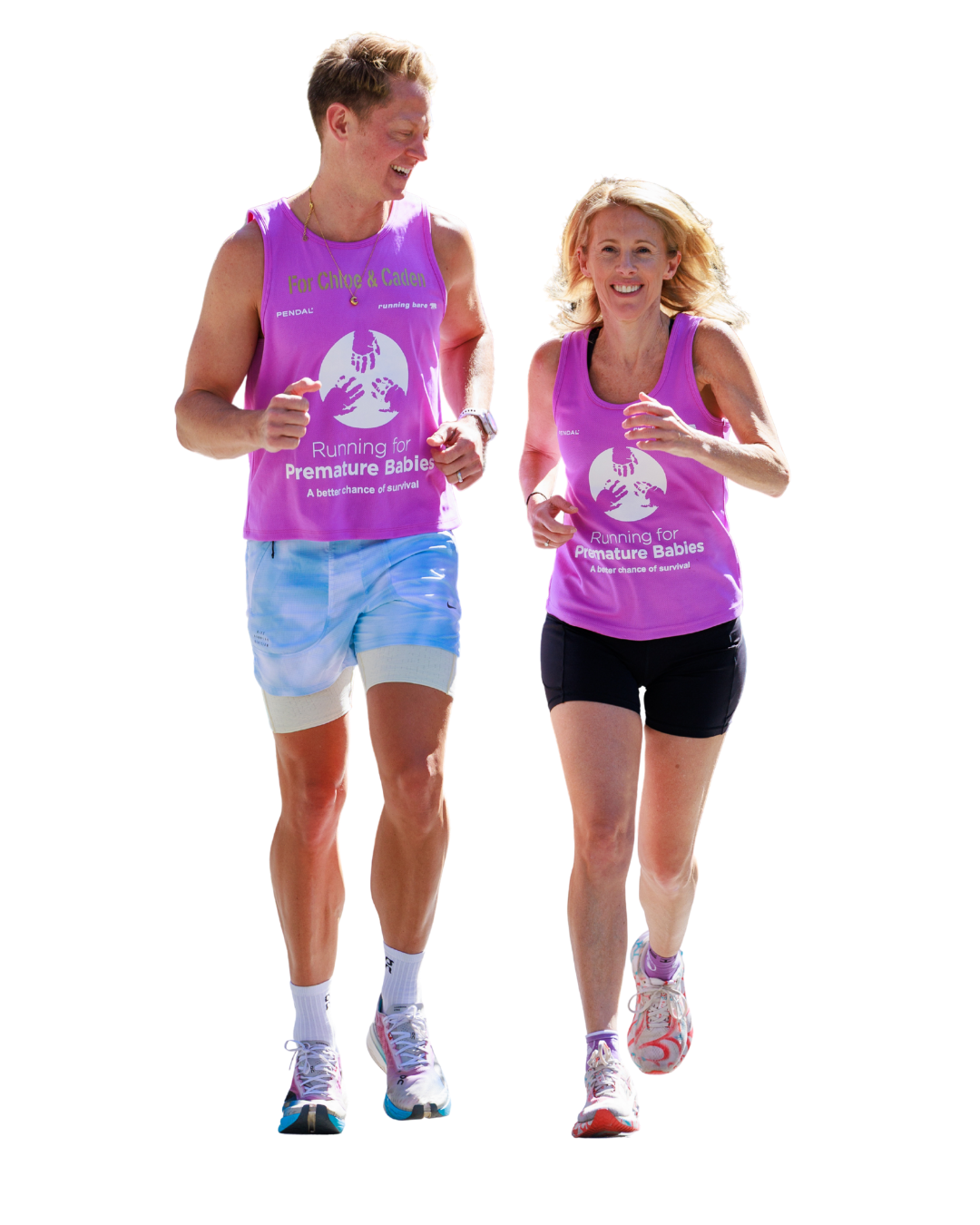
Running for Premature Babies is one of Australia’s leading charities, funding essential equipment for NICUs, special care nurseries and maternity units to give sick and premature babies the best possible chance of survival.
Since 2007, our charity has raised millions in donations to provide critical neonatal equipment to hospitals nationwide, including humidicribs, monitors, ventilators, and resuscitation cots. We also invest in cutting edge research to advance the treatment options for premature infants. You can read more about our impact here.
Beyond funding, we raise awareness of prematurity and the immense demands on NICUs, highlighting the reality that 1 in 10 babies in Australia is born prematurely. Our charity celebrates all prematurely born children, both living and lost, with many supporters having lived experience of prematurity.
Through community running events and nationwide fundraising, Running for Premature Babies empowers everyday Australians to make a tangible difference to give premature babies their best possible start in life.
Give today and help fund urgently needed neonatal equipment and research that save the lives of sick and premature babies.
Canberra Health Services. (2021). Neonatal routine care (CHS21/256). Retrieved February 15, 2026, from https://www.canberrahealthservices.act.gov.au/__data/assets/word_doc/0010/1981504/Neonatal-Routine-Care.docx Royal Children’s Hospital. (n.d.). Skin-to-skin care for the newborn: Nursing guideline. Retrieved February 15, 2026, from https://www.rch.org.au/rchcpg/hospital_clinical_guideline_index/Skin_to_Skin_Care_for_the_Newborn/ Seabra, M. (2023, August 3). Kangaroo care: Nurturing parents, protecting babies, changing lives. UNICEF Australia. Retrieved February 22, 2026, from https://www.unicef.org.au/stories/kangaroo-care