

Feeding Premature Babies in Hospital
Feeding premature babies in the neonatal intensive care unit (NICU) is a delicate process shaped by your baby’s unique developmental needs. Preterm infants often have immature digestive systems and are still learning to coordinate the suck-swallow-breathe reflex, so they may require specialised feeding methods and close monitoring during their early days.
This can be an emotional and sometimes overwhelming experience for parents, especially when feeding does not follow the path they expected.
This article will guide you through the different ways premature babies are fed in hospital, the milestones to look for as they grow, the common challenges medical teams manage and the vital role parents play throughout the feeding journey.
How Premature Babies Are Fed in Hospital
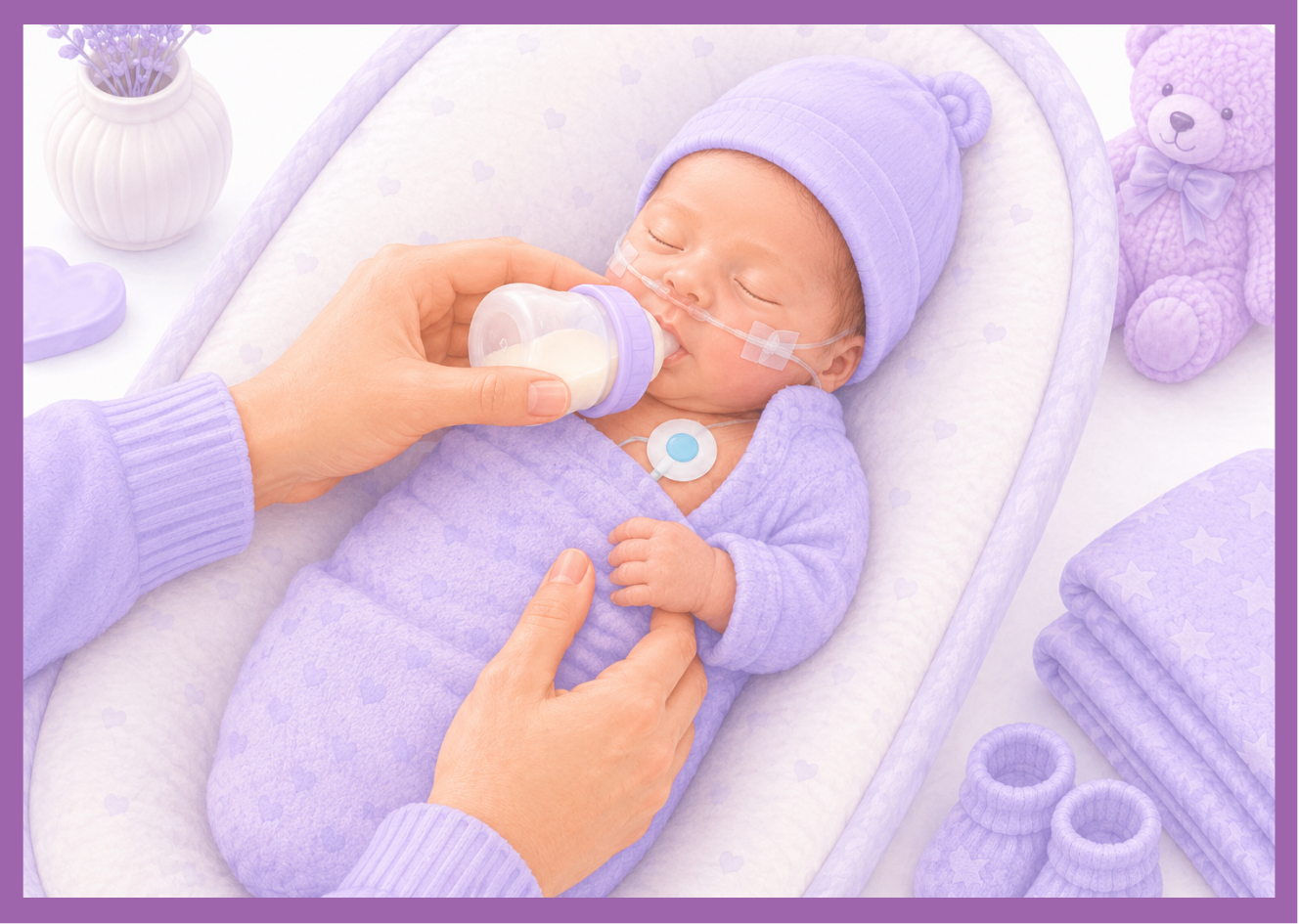
Premature babies in hospital are fed using methods tailored to their gestational age and medical condition. For very small infants, particularly those weighing less than 1,000 grams, guidelines may recommend beginning with total parenteral nutrition (TPN) to provide essential nutrients intravenously until their digestive system is ready for milk feeds.
As soon as it is safe, NICU teams introduce small trophic feeds through a feeding tube, also known as gavage feeding. These feeds often use the mother’s own milk (MOM) or pasteurised donor human milk (PDHM). The first small feed may be given within six hours of birth to support gut development and reduce the risk of complications such as necrotising enterocolitis (NEC), a serious inflammatory condition affecting the bowel.
As premature babies mature, they gradually transition towards breastfeeding or bottle-feeding. Premature babies typically begin attempting oral feeding once they can coordinate sucking, swallowing and breathing, often at or after 34 weeks of gestation.
Throughout this feeding progression, neonatologists oversee medical safety and nutritional planning, while lactation consultants support parents with expressing breast milk and maintaining their milk supply.
Breast Milk and Its Benefits for Premature Infants
Breast milk is often described as “liquid gold” for premature infants because it is uniquely suited to support their increased nutritional and developmental needs.
Breast milk produced after a premature birth naturally contains higher levels of protein, fat, sodium and immune-supporting factors. It is easier for an immature digestive system to process and provides important protection against infections and conditions such as necrotising enterocolitis (NEC). It also contains protective enzymes that can support growth and immunity while reducing feeding intolerance.
In hospital, parents are supported to provide expressed breast milk. When this is not possible, many Australian NICUs use pasteurised donor human milk so vulnerable babies can still receive the benefits of human milk.
For very small infants, human milk fortifiers may be added to increase the protein, energy and essential nutrients needed to support safe growth and development.

What Formula Is Used for Premature Babies in the NICU?
Formula feeding is sometimes used in the NICU when breast milk is unavailable, when additional nutrition is required or when specific medical circumstances prevent the use of a mother’s own milk.
Premature babies may need breast milk supplements or alternatives, including specialised formulas, when breast milk does not meet all of their nutritional needs or is not available in sufficient quantities.
These may include:
- High-Protein Formulas: Designed to meet the increased protein needs of premature babies and support early growth and development.
- High-Calorie Formulas: Provide more calories in each feed to help premature babies gain weight when they cannot safely tolerate larger volumes.
- Fortified Preterm Formulas: Enriched with additional minerals, fats and vitamins to support bone development, immune health and overall growth.
- Breast Milk Alternatives or Supplements: Used when breast milk supply is low or unavailable, providing balanced nutrition tailored to the needs of premature babies.
Formula feeding in the NICU is carefully monitored by neonatal teams. They assess feeding tolerance, digestive responses, weight gain and overall development, adjusting each baby’s feeding plan as needed to support safe and steady progress.
Feeding Milestones in the NICU
As premature babies grow and develop in the NICU, they progress through a series of important feeding milestones that guide their transition from tube feeding to oral feeding.
Premature babies may begin showing feeding readiness through behaviours such as rooting, which involves turning the head and opening the mouth in search of a nipple, displaying a sucking reflex and tolerating small milk feeds given through a tube.
Many premature babies cannot breastfeed at first, but they can still receive breast milk through a feeding tube. As they mature, often at around 34 weeks’ gestation, they may begin learning to coordinate sucking, swallowing and breathing, allowing a gradual transition to breastfeeding or bottle-feeding with support from the NICU team.
Feeding amounts are increased slowly and carefully according to each baby’s weight, tolerance and developmental maturity. Neonatal teams closely monitor growth, intake and safety throughout this progression.
Role of Parents in Feeding Their Premature Baby
Parents play an essential role in supporting their premature baby’s feeding journey in the NICU. One of the most valuable ways parents can help is through skin-to-skin contact, also known as kangaroo care, which can strengthen bonding, support breastfeeding and help improve a baby’s feeding readiness and overall wellbeing.
Parents are also encouraged to express breast milk regularly, beginning as soon as possible after birth and continuing every few hours. Expressed milk may be given through a feeding tube until a baby is ready to feed orally. Hospital staff provide guidance on the safe expression, storage and handling of breast milk in the NICU.
As babies grow and begin showing feeding readiness cues, parents receive hands-on support from NICU nurses and lactation consultants to learn breastfeeding or bottle-feeding techniques. This helps parents feel more confident and prepared before taking their baby home.
Common Feeding Challenges and How They Are Managed
Premature babies can experience several feeding challenges in the NICU, including reflux, feeding intolerance and the risk of aspiration. These challenges require careful monitoring and gradual adjustments to each baby’s feeding plan.
One of the most serious conditions is necrotising enterocolitis (NEC), an inflammation of the bowel that can cause severe illness, feeding intolerance or the need to stop milk feeds temporarily.
Some premature babies also experience slow weight gain. Medical teams may address this by gradually increasing feeding volumes or adding fortifiers to breast milk to safely provide additional protein, calories and essential nutrients.
Managing these challenges often requires a multidisciplinary team. Neonatologists oversee medical stability, dietitians monitor nutrition and growth, and speech or feeding therapists assess oral motor skills to help babies develop safe and coordinated feeding.
Feeding After Discharge: What Parents Need to Know
Once a premature baby leaves the NICU, families follow a home feeding plan designed to continue the safe and steady progress made in hospital.
Many premature babies still need feeding support after discharge. Parents may be advised to continue expressing breast milk, bottle-feeding or breastfeeding according to their baby’s abilities and readiness.
At home, parents are encouraged to monitor their baby’s growth, milk intake and feeding patterns so any ongoing difficulties can be identified early. Follow-up care from the medical team is important to ensure the baby continues to grow and tolerate feeds after leaving hospital.
If feeding delays or challenges continue, babies may be referred to dietitians, lactation consultants, speech pathologists or feeding therapists. These specialists can provide targeted support to help premature babies continue developing safe and effective feeding skills.
Emotional and Psychological Aspects of Feeding a Premmie
Feeding a premature baby can be an emotional journey, and many parents experience stress, guilt or anxiety when their milk supply is low or their baby has difficulty feeding. These feelings are completely normal within the NICU environment.
Expressing milk regularly, particularly during the early weeks, can be physically exhausting and emotionally demanding. Many parents need reassurance and practical support as they navigate this part of their baby’s care.
Even very small amounts of breast milk can be valuable, and parents are encouraged to remember that every contribution counts. Throughout the NICU stay, nurses, lactation consultants and counsellors can help parents cope with setbacks and celebrate meaningful milestones, such as a successful tube feed, an increase in milk supply or a baby’s first attempt at sucking.
How Fundraising Supports Feeding Equipment and Care
Fundraising and charitable donations can help NICUs access essential feeding equipment and support, including hospital-grade breast pumps, access to pasteurised donor human milk and lactation services. These resources are important for vulnerable premature babies who may rely on human milk for protection, easier digestion and healthy development.
Financial support may also contribute to staff education and training in current developmental and nutritional care practices, helping ensure families receive expert guidance as their babies progress from tube feeding to oral feeding.
Through community fundraising and events, Running for Premature Babies helps hospitals across Australia purchase life-saving and life-improving equipment, including equipment that supports feeding care and gives premature babies a better chance of survival and healthy development.
See FAQs Below
Get Involved
Run with us
Donate
Join the Premmie Marathon Challenge
FAQs
How are premature babies fed in the NICU?
Premature babies in the NICU are fed using methods that match their developmental readiness and medical needs. Many start with tube feeding, where expressed breast milk or donor milk is gently delivered through a thin tube into the baby’s stomach until they are strong enough to coordinate sucking, swallowing, and breathing. Very small or medically fragile infants may initially require total parenteral nutrition (TPN) to provide essential nutrients while their digestive system matures. As babies grow and show readiness cues, they gradually transition to breastfeeding or bottle‑feeding, with NICU staff supporting families through each stage.
When will my premature baby be able to breastfeed or bottle‑feed?
Most premature babies are able to start breastfeeding or bottle‑feeding once they can coordinate sucking, swallowing, and breathing; a developmental skill that typically emerges around 34 weeks’ gestation. Before this point, they usually receive milk through a feeding tube while practising non‑nutritive sucking to build skills. As they show readiness cues, such as rooting, staying awake for feeds, and maintaining stable breathing, NICU staff gradually help them transition to oral feeds at a pace that is safe and comfortable for the baby.
What is NEC and why is it linked to feeding?
Necrotising enterocolitis (NEC) is a serious bowel condition that occurs when parts of a premature baby’s intestine become inflamed and start to die. It is most common in preterm infants because their gut is immature and more vulnerable to infection and reduced blood flow. NEC is linked to feeding because symptoms often appear when babies begin or increase milk feeds, and premature babies who receive formula instead of breast milk have a higher risk of developing the condition. Breast milk offers important protection against NEC, and NICU staff carefully watch for early signs like feeding intolerance, a swollen tummy, or blood in the stool.

How Running for Premature Babies Helps Support NICUs, SCNs and Maternity Units
Running for Premature Babies is one of Australia’s leading charities, funding essential equipment for NICUs, special care nurseries and maternity units to give sick and premature babies the best possible chance of survival.
Since 2007, our charity has raised millions in donations to provide critical neonatal equipment to hospitals nationwide, including humidicribs, monitors, ventilators, and resuscitation cots. We also invest in cutting edge research to advance the treatment options for premature infants. You can read more about our impact here.
Beyond funding, we raise awareness of prematurity and the immense demands on NICUs, highlighting the reality that 1 in 10 babies in Australia is born prematurely. Our charity celebrates all prematurely born children, both living and lost, with many supporters having lived experience of prematurity.
Through community running events and nationwide fundraising, Running for Premature Babies empowers everyday Australians to make a tangible difference to give premature babies their best possible start in life.
Give today and help fund urgently needed neonatal equipment and research that save the lives of sick and premature babies.