

What Is a Short Cervix & Why Does It Matter?
The cervix is an important part of the female reproductive system, forming the passage between the uterus and the vagina. It typically measures around 3 centimetres in length and has two openings, one leading into the uterus and the other opening into the vagina.
Throughout pregnancy, the cervix usually remains closed to help protect the developing baby. As labour begins, it gradually softens, shortens and dilates, allowing the baby to pass through the birth canal during childbirth.
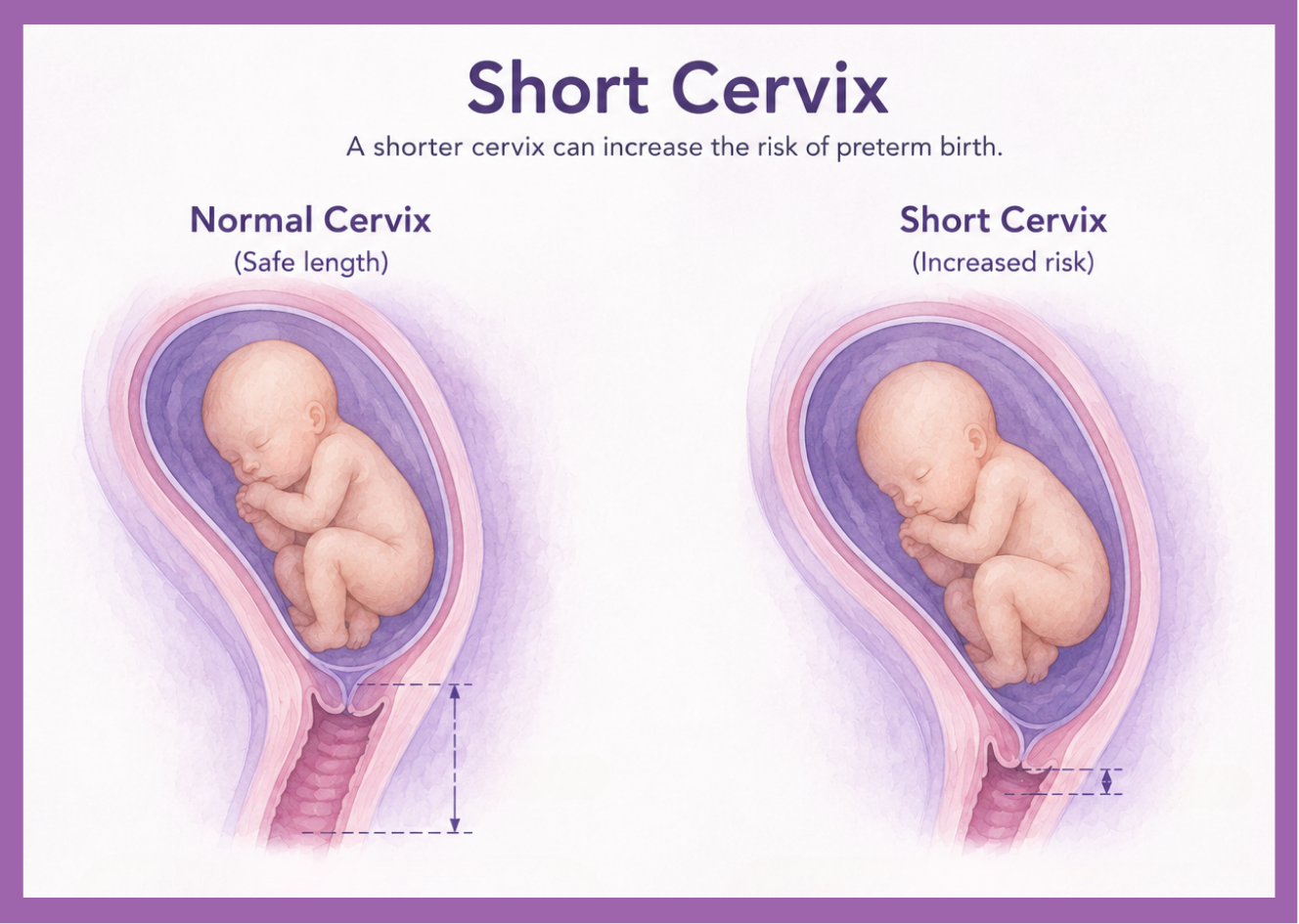
What Is a Short Cervix?
A short cervix is a condition in which the cervical length measures less than 25 millimetres during pregnancy, increasing the risk of premature birth. In some cases, a short cervix may indicate that the cervix is not strong enough to keep the uterus closed until the baby is ready to be born. This is known as cervical insufficiency.
According to the Australian Journal of General Practice, a short cervical length detected through transvaginal ultrasound between 18 and 24 weeks’ gestation is a strong predictor of spontaneous preterm birth.
Symptoms of a Short Cervix
A short cervix may not cause noticeable symptoms. However, in some cases, a person may experience:
- Pelvic Pressure: A sensation of heaviness or discomfort in the lower abdomen.
- Back Pain: Persistent or unusual pain in the lower back.
- Spotting or Light Bleeding: Vaginal bleeding without an obvious cause.
- Increased Vaginal Discharge: A sudden increase in discharge that may indicate cervical changes.
Does a Short Cervix Cause Premature Birth?
A short cervix can increase the risk of premature birth because it may not provide enough structural support to keep the uterus closed until the pregnancy reaches full term.
What Causes a Short Cervix During Pregnancy?
The exact cause of a short cervix is not always clear, but certain factors can increase the likelihood of developing one.
People who have previously experienced a premature birth may have a higher risk of developing a short cervix. Surgical procedures such as a cone biopsy or loop excision, which are used to remove abnormal cervical cells, may also contribute to cervical shortening.
Why Is Further Research Important?
Further research into short cervix is essential to improve early detection, optimise treatment strategies, better understand its underlying causes and ultimately help reduce the number of premature births.
Charities such as Running for Premature Babies can help fund essential medical research into short cervix, which remains an important health concern in Australia and around the world.
At Running for Premature Babies, we are incredibly grateful for our dedicated community of fundraisers and volunteers. If you would like to help advance medical research or equip hospitals with essential NICU resources, you can make a difference by donating here.
See FAQs Below
Get Involved
Run with us
Donate
Join the Premmie Marathon Challenge
FAQs
Does a short cervix affect labour and delivery?
A short cervix can affect labour and delivery, because the cervix may begin to open before contractions start and therefore increase the risk of premature birth. A weakened cervical support due to a short cervix may make it difficult for the pregnancy to reach full term, particularly in cases of multiple pregnancies.
How is a short cervix managed?
- Progesterone therapy helps strengthen the cervix and reduce preterm birth risk.
- Cervical cerclage or surgical stitch is placed in the cervix to prevent early dilation.
- Regular monitoring and ultrasound screenings help track cervical length and detect early changes.
Can a short cervix be prevented?
A short cervix cannot always be prevented, as some individuals are naturally born with a shorter cervical length. However, certain measures may help reduce the risk of cervical shortening during pregnancy such as avoiding unnecessary cervical procedures (cone biopsy or loop excision), avoiding heavy lifting and regular pregnancy monitoring.2

How Running for Premature Babies Helps Support NICUs, SCNs and Maternity Units
Running for Premature Babies is one of Australia’s leading charities, funding essential equipment for NICUs, special care nurseries and maternity units to give sick and premature babies the best possible chance of survival.
Since 2007, our charity has raised millions in donations to provide critical neonatal equipment to hospitals nationwide, including humidicribs, monitors, ventilators, and resuscitation cots. We also invest in cutting edge research to advance the treatment options for premature infants. You can read more about our impact here.
Beyond funding, we raise awareness of prematurity and the immense demands on NICUs, highlighting the reality that 1 in 10 babies in Australia is born prematurely. Our charity celebrates all prematurely born children, both living and lost, with many supporters having lived experience of prematurity.
Through community running events and nationwide fundraising, Running for Premature Babies empowers everyday Australians to make a tangible difference to give premature babies their best possible start in life.
Give today and help fund urgently needed neonatal equipment and research that save the lives of sick and premature babies.