

Key Milestone Weeks in Pregnancy
Third Trimester
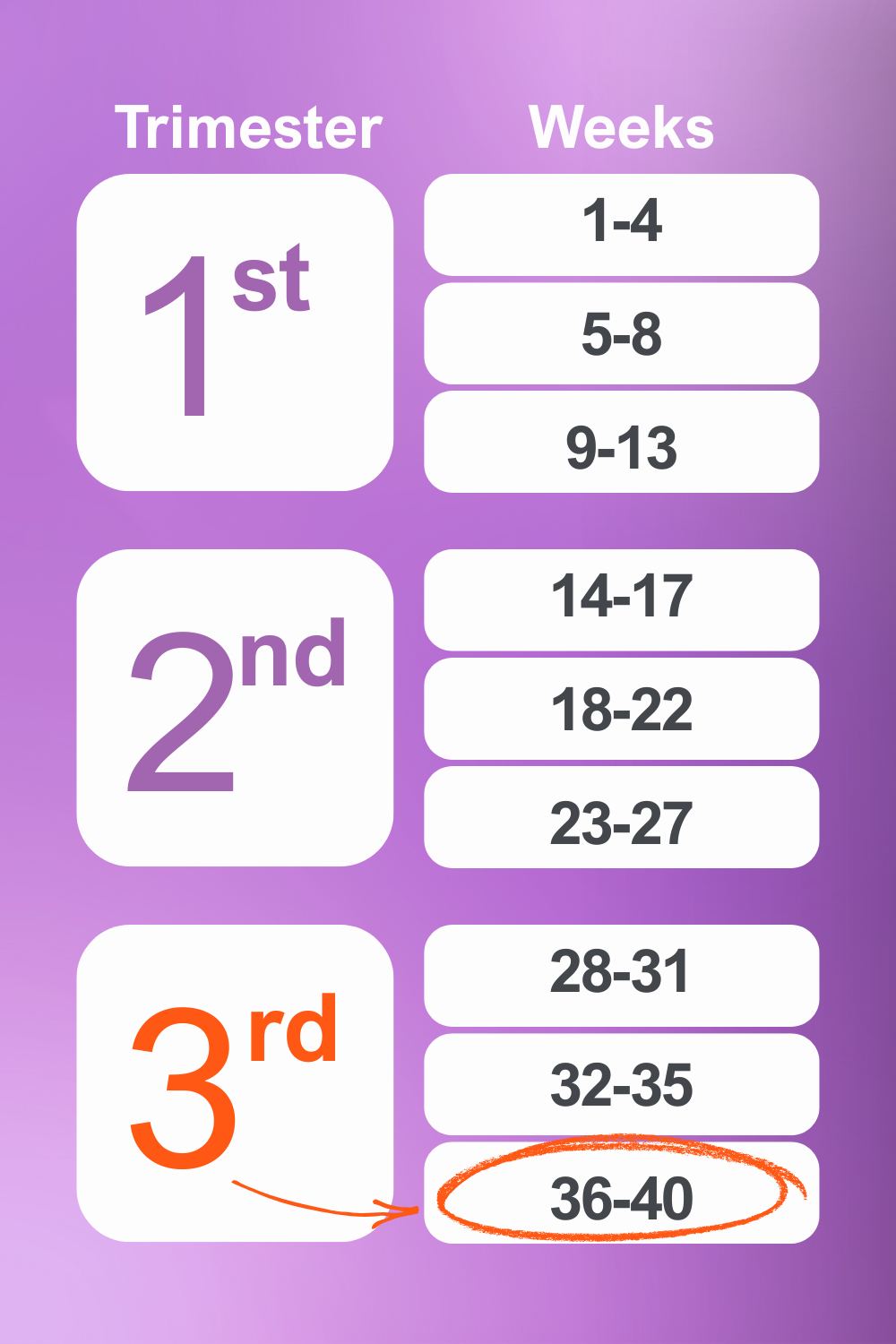
36 Weeks: Baby gains about an ounce a day; may “drop” into the pelvis in preparation for birth.
Summary:
At 36 weeks pregnant, your baby is gaining weight rapidly, about an ounce (28 grams) per day, and is nearly ready for life outside the womb. Their body fat is increasing, helping with temperature regulation after birth, and many babies begin to “drop” into the pelvis, a process known as engagement, which is a sign that your body is preparing for labour. For you, this shift may bring relief from breathlessness as the baby moves lower, but it can also increase pelvic pressure, frequent urination, and lower back discomfort. You may also notice more Braxton Hicks contractions, and your body is actively preparing for birth, even if labour is still a few weeks away.
At 36 weeks pregnant, your body is preparing for birth in noticeable ways. If your baby’s head has engaged (moved down into your pelvis), you may feel increased pelvic pressure, more frequent urination, and even discomfort from the baby pressing on your cervix. The good news is that this shift often makes breathing easier, as the baby moves away from your lungs. You might also feel tired, emotional, or impatient, and this is a good time to consider slowing down or stopping work if possible. From a health perspective, be alert to any unusual symptoms such as severe swelling, headaches, or changes in vision, which could signal complications like pre-eclampsia. Regular antenatal visits are essential now, as your care team monitors both your wellbeing and your baby’s readiness for birth.

At 36 weeks pregnant what is happening with my baby?
At 36 weeks pregnant, your baby is fully developed, weighing about 2.6 kgs, is about 48cm in length and is tightly curled up, ready to be born. If this is your first pregnancy, it’s likely that your baby’s head has moved down into your pelvis, a process called engagement, which is a sign that birth is approaching. If you’ve had babies before, this engagement may not happen until labour begins. Your baby should continue to move in their normal pattern, and any noticeable change in movement should be reported to your healthcare provider immediately, as it could be a sign that your baby is not well. These final weeks are crucial for monitoring your baby’s position and wellbeing as they prepare for birth.
This information has been reviewed by Neonatologist, Dr John Smyth MBChB, FRACP FRCPCH.
See FAQs Below
Get Involved
Run with us
Donate
Join the Premmie Marathon Challenge
FAQs
At 36 weeks pregnant, what are signs of labour?
- Baby “dropping” (engagement): The baby’s head moves lower into your pelvis, increasing pressure and the need to urinate more often.
- Increased vaginal discharge: May become thicker or more mucus-like. A “show” (pink or blood-stained mucus) is a sign the cervix is starting to open.
- Braxton Hicks contractions: These practice contractions may become stronger and more frequent.
- Period-like cramps or lower backache: Can signal the body is preparing for labour.
- Waters breaking: A gush or trickle of fluid from the vagina indicates the amniotic sac has ruptured.
- Nesting instinct: A sudden burst of energy and urge to prepare your home for the baby.
I am feeling pressure on my pelvis, is this normal?
Yes, pressure often occurs when your baby’s head has engaged, meaning it has moved down into your pelvis in preparation for birth. This can cause a noticeable increase in pelvic pressure, a sensation of heaviness, and even discomfort as the baby presses on your cervix. You may also find yourself needing to urinate more frequently due to the added pressure on your bladder. While this is a normal part of late pregnancy, if the pressure is accompanied by severe pain, bleeding, or other unusual symptoms, it’s important to contact your healthcare provider to rule out any complications.
Is my baby fully developed at 36 weeks pregnant?
At 36 weeks pregnant, your baby is considered fully developed. While they are still gaining weight and refining functions like breathing and feeding, they are tightly curled up and ready to be born. If this is your first pregnancy, it’s likely that your baby’s head has moved down into your pelvis which is a sign that birth is approaching. Babies born at this stage are classified as late preterm, and most can breathe and feed with minimal medical support. However, continued development of the lungs and brain will occur over the next few weeks, so staying pregnant a little longer is still beneficial.
Though your baby is classified as “late preterm” if born now, most do very well with minimal intervention. That said, the final few weeks are vital for optimal brain development, which grows by nearly 30% between weeks 35 and 39. So every extra day in the womb counts.
Is it safe to have sex at 36 weeks pregnant?
If your pregnancy is progressing normally, it's generally safe to have sex and experience orgasm. Many people worry that sexual activity might harm the baby, but rest assured, your baby is well protected inside the amniotic sac, and sex won't cause harm.
However, there are certain situations where sex may not be recommended. These include if you:
- have experienced signs of miscarriage or premature labour
- have a history of cervical weakness
- are dealing with severe abdominal pain or cramping
- have been diagnosed with placenta praevia
- are experiencing vaginal bleeding, or have had unexplained bleeding
- suspect that your waters have broken
If any of these apply, it’s important to speak with your healthcare provider before engaging in sexual activity.
If I need to leave in a hurry, what things do I take to hospital?
If you need to leave for the hospital in a hurry, the most important thing is to get yourself and your baby to medical care safely. Don’t worry about packing. However, if there’s time, try to remember these three essentials:
- Your pregnancy health record, so hospital staff have your medical history
- Comfortable clothes and toiletries for labour and your stay
- Baby essentials, like nappies, a wrap, and a change of clothes
Here’s a quick grab-and-go checklist (place this by the door):
- Health records & ID
- Maternity pads or period-proof underwear
- Phone + charger
- Baby’s first outfit & nappy
- Water bottle & snacks
- Cash or card for hospital parking
Related reading:
First Trimester
What to expect when you're 3-4 weeks pregnant
What to expect when you're 5 weeks pregnant
What to expect when you're 6-9 weeks pregnant
What to expect when you're 10 weeks pregnant
What to expect when you're 12 weeks pregnant
What to exprect when you're 14 weeks pregnant
Second Trimester
What to expect when you're 18 weeks pregnant
What to expect when you're 20 weeks pregnant
What to expect when you're 22-23 weeks pregnant
What to expect when you're 24 weeks pregnant
What to expect when you're 26-27 weeks pregnant
Third Trimester
What to expect when you're 28 weeks pregnant
What to expect when you're 29 weeks pregnant
What to expect when you're 30 weeks pregnant
What to expect when you're 32-33 weeks pregnant
What to expect when you're 34 weeks pregnant
What to expect when you're 36 weeks pregnant
What to expect when you're 37 weeks pregnant
What to expect when you're 38-40 weeks pregnant
Disclaimer: This information by Running for Premature Babies Foundation is educational and informative in nature and is not medical advice or a healthcare recommendation. For further information, please seek professional medical advice from a qualified healthcare provider.