

Key Milestone Weeks in Pregnancy
Second Trimester
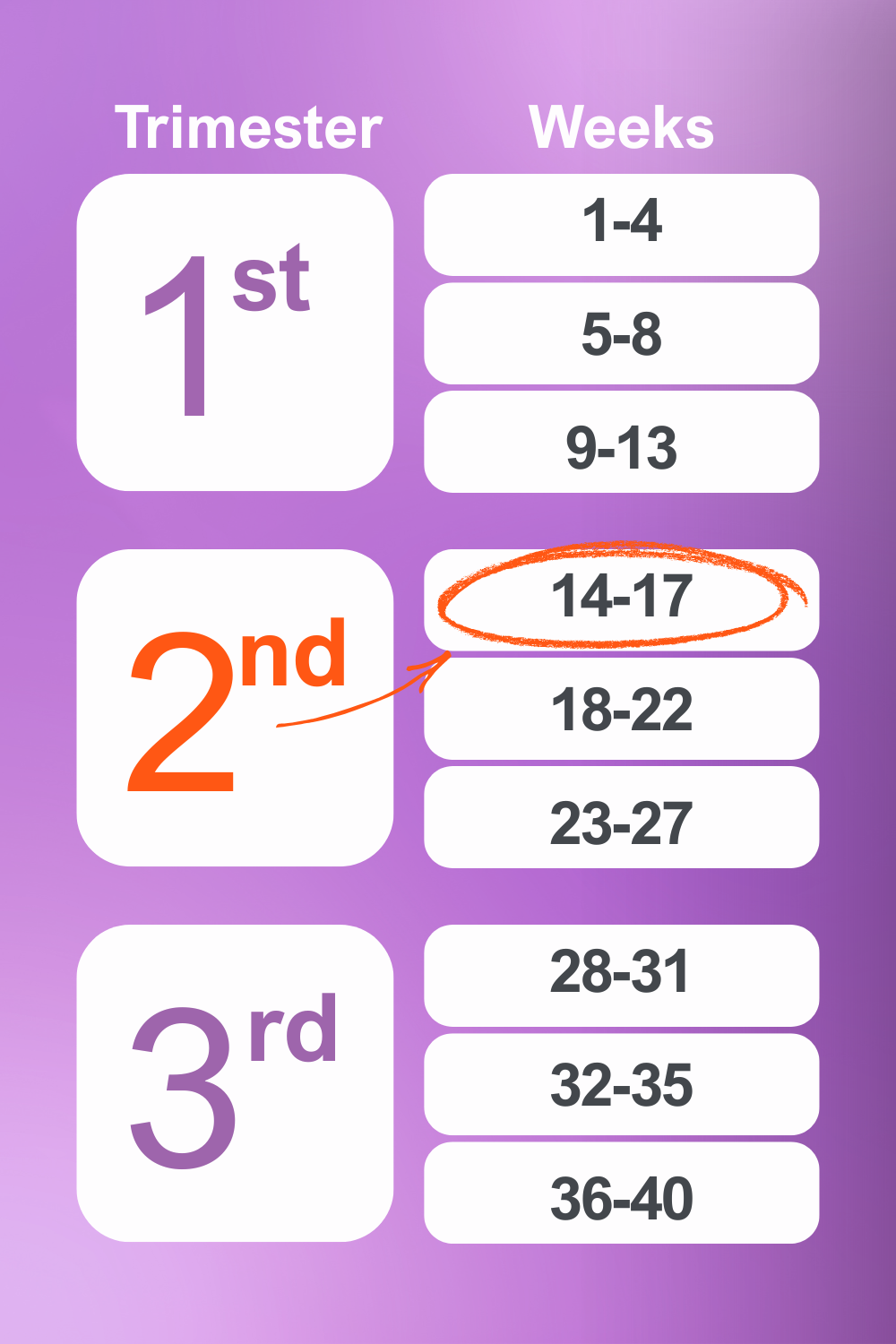
14-16 Weeks: Baby’s sex can be seen on ultrasound; facial expressions form.
Summary:
At 14-16 weeks pregnant, your baby is growing quickly, and you may be able to determine your baby’s sex via ultrasound. Tiny fingers and toes are forming, and their face is becoming more expressive. You might start to feel gentle flutters as they move, a quiet reminder of the life growing inside. Your energy may return, and your bump may begin to show, which could bring a sense of connection and anticipation. Inside, your baby’s ears are developing, and they may already hear your heartbeat. Hormonal changes might bring skin shifts like a dark vertical line that often appears on the abdomen during pregnancy and is a natural sign of your body’s transformation. These weeks are a gentle turning point, where early symptoms usually ease and the journey ahead begins to feel more real.
At 14-16 weeks pregnant, many women experience a boost in energy as morning sickness fades. A visible baby bump may begin to show, and breasts may start producing colostrum. Increased blood flow can lead to a “pregnancy glow,” but may also cause bleeding gums, nosebleeds, or headaches. Skin changes may appear, such as darkening around the nipples or the appearance of a linea nigra, a dark vertical line that typically runs from the belly button down to the pubic area. Hormonal shifts loosen ligaments, which can result in back pain and leg cramps. At 16 weeks some women may notice early foetal movements, known as “quickening,” which feel like gentle flutters or bubbles.
Many women experience a lift in mood as early discomforts like nausea ease, but hormonal fluctuations can still cause emotional ups and downs. It’s normal to feel a mix of joy, worry, and even moments of overwhelm as the reality of parenting sets in. Staying connected with your support network and talking about your feelings with either a partner, midwife, or trusted friend can help you navigate this emotional phase with confidence and care.
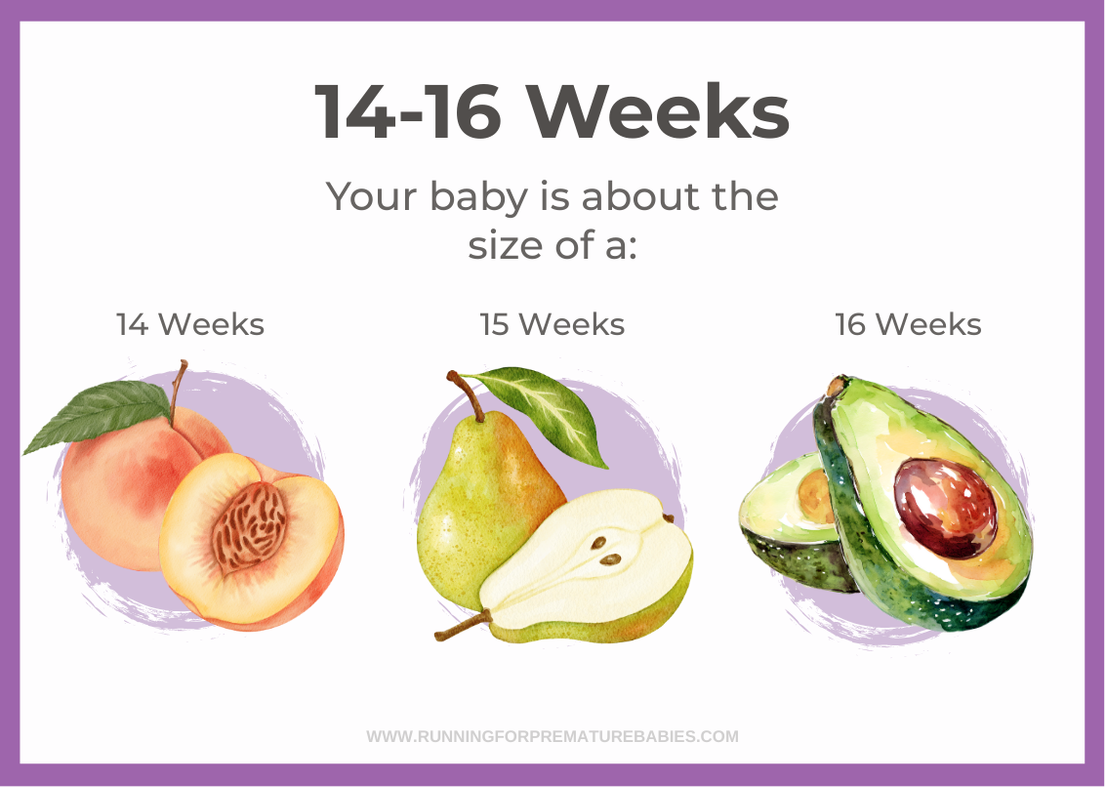
By week 14-16 weeks pregnant, your baby is about 8.5–11.5 cm long and weighs around 40–100 grams. Your baby’s facial features are becoming more defined, reflexes are developing, and hands and feet may curl if touched. Tiny fingernails begin to form, and red blood cells are now produced in the baby's body. The baby’s body starts growing faster than the head, and bones in the ears begin to develop, allowing the baby to hear muffled sounds like the mother’s heartbeat and voice. A fine layer of hair called lanugo begins to cover the body, possibly helping with temperature regulation. As your baby reaches 16 weeks a growth spurt may begin. The baby’s eyes and ears are now in place, joints are functioning, and facial features and expressions are forming.
The umbilical cord is fully developed, and the baby may start moving fingers and toes. Some women may begin to feel the first gentle flutters of movement, especially if they’ve been pregnant before. Between 14-16 weeks of pregnancy, it is often possible to determine your baby’s sex via ultrasound. This is typically done during a second trimester scan, where the sonographer looks for the development of external genitalia. The accuracy of sex determination improves with gestational age and depends on the baby's position, the quality of the ultrasound equipment, and the experience of the sonographer.
This information has been reviewed by Neonatologist, Dr John Smyth MBChB, FRACP FRCPCH.
See FAQs Below
Get Involved
Run with us
Donate
Join the Premmie Marathon Challenge
FAQs
How do I find out my baby’s sex at 14-16 week pregnant?
In Australia, it is sometimes possible to find out your baby’s sex between 14 and 16 weeks, but it depends on the method and individual circumstances.
- Ultrasound:
A standard ultrasound may show the baby’s sex from around 16 weeks, but accuracy improves closer to 18–20 weeks, when the anatomy scan is typically done. - Non-Invasive Prenatal Testing (NIPT):
This blood test, available from around 10 weeks, can detect chromosomal differences and may reveal the baby’s sex earlier than ultrasound. - Amniocentesis:
If performed (usually from week 15 onward), this diagnostic test can also determine sex, though it’s typically done for medical reasons.
At 14-16 weeks is it safe to travel or exercise?
Yes, travel and exercise are generally safe at 14–16 weeks pregnant, as long as your pregnancy is uncomplicated and you're feeling well.
Exercise:
- Light to moderate exercise is encouraged and beneficial for both you and your baby.
- Safe activities include walking, swimming, and stationary cycling.
- Exercise can help improve sleep, mood, energy levels, and reduce the risk of complications like gestational diabetes and pre-eclampsia.
- Avoid high-impact activities or those with a risk of falling, overheating, or abdominal trauma.
- Aim for 2½ hours of moderate activity per week, or about 30 minutes most days.
Travel:
- Most women can travel safely during the second trimester, which is often considered the most comfortable time.
- Stay hydrated, move regularly, and wear a seatbelt low across your hips when in a car.
- Check with your doctor or midwife before starting new activities or making travel plans, especially if you have a complex pregnancy or medical conditions.
What tests or scans happen at 14-16 weeks?
Between 14 and 16 weeks pregnant, several routine and optional tests or scans may be offered in Australia to monitor your health and your baby’s development:
Maternal Serum Screening (MSS)
- A blood test offered between 14-20 weeks. It’s a screening test, not diagnostic
- Assesses the risk of chromosomal conditions like Down Syndrome and neural tube defects.
Amniocentesis
- May be offered from 15 weeks onward if earlier screening shows increased risk.
- Involves collecting amniotic fluid to test for genetic conditions.
- It’s a diagnostic test, typically recommended in specific cases.
Routine Blood Tests
- May include checks for iron levels, vitamin D, blood group, and infections (e.g. rubella, hepatitis, HIV).
- Often done at the first antenatal visit but may be repeated if needed.
Mental Health Screening
- A questionnaire may be offered to assess emotional wellbeing and screen for anxiety or depression.
Is it normal to still feel tired or unwell at 14-16 weeks pregnant?
Yes, it’s completely normal to still feel tired or unwell at 14–16 weeks pregnant, even though many women begin to feel better during this stage. While the second trimester is often described as the most comfortable and energetic time, some women still experience fatigue or lingering nausea. Your body is working hard to support your growing baby, and hormonal changes, increased blood volume, and physical adjustments can all contribute to feeling tired. If symptoms are persistent or affecting your daily life, it’s always a good idea to check in with your doctor or midwife. They can help rule out other causes like iron deficiency or dehydration.
At 14-16 weeks, can I feel my baby move yet?
Yes, you might start to feel your baby move between 14 and 16 weeks, but it’s also completely normal not to feel anything just yet. Women who have been pregnant before may begin to notice gentle movements around 16 weeks. These early sensations are often described as butterflies, flutters, or bubbles. However, if it’s your first pregnancy, you are more likely to feel movement a bit later, typically between 18 and 22 weeks.
Should I be taking prenatal vitamins at 14-16 weeks?
Yes, continuing prenatal vitamins is important throughout your pregnancy. At 14-16 weeks, key nutrients like iron, folic acid, iodine, and vitamin D support your baby’s rapid development and your body’s increased needs. If you’re experiencing side effects like nausea or constipation, talk to your doctor. There may be alternative formulations that are easier to tolerate.
Can I sleep on my back at 14-16 weeks pregnant?
Related reading:
First Trimester
What to expect when you're 3-4 weeks pregnant
What to expect when you're 5 weeks pregnant
What to expect when you're 6-9 weeks pregnant
What to expect when you're 10 weeks pregnant
What to expect when you're 12 weeks pregnant
What to exprect when you're 14 weeks pregnant
Second Trimester
What to expect when you're 18 weeks pregnant
What to expect when you're 20 weeks pregnant
What to expect when you're 22-23 weeks pregnant
What to expect when you're 24 weeks pregnant
What to expect when you're 26-27 weeks pregnant
Third Trimester
What to expect when you're 28 weeks pregnant
What to expect when you're 29 weeks pregnant
What to expect when you're 30 weeks pregnant
What to expect when you're 32-33 weeks pregnant
What to expect when you're 34 weeks pregnant
What to expect when you're 36 weeks pregnant
What to expect when you're 37 weeks pregnant
What to expect when you're 38-40 weeks pregnant
Disclaimer: This information by Running for Premature Babies Foundation is educational and informative in nature and is not medical advice or a healthcare recommendation. For further information, please seek professional medical advice from a qualified healthcare provider.
References:
Pregnancy, Birth and Baby. (n.d.). Pregnancy week-by-week. Australian Government Department of Health and Aged Care. https://www.pregnancybirthbaby.org.au/pregnancy-week-by-week Retrieved July 27th 2025
Raising Children Network. (n.d.). Pregnancy: Week by week. https://raisingchildren.net.au/pregnancy/week-by-week Retrieved July 27th 2025
Healthdirect Australia. (n.d.). Healthdirect. Australian Government Department of Health and Aged Care. https://www.healthdirect.gov.au Retrieved July 27th 2025
Healthdirect Australia. (n.d.). Routine antenatal tests. Australian Government Department of Health and Aged Care. https://www.healthdirect.gov.au/routine-antenatal-tests. Retrieved July 27th 2025