

Key Milestone Weeks in Pregnancy
Third Trimester
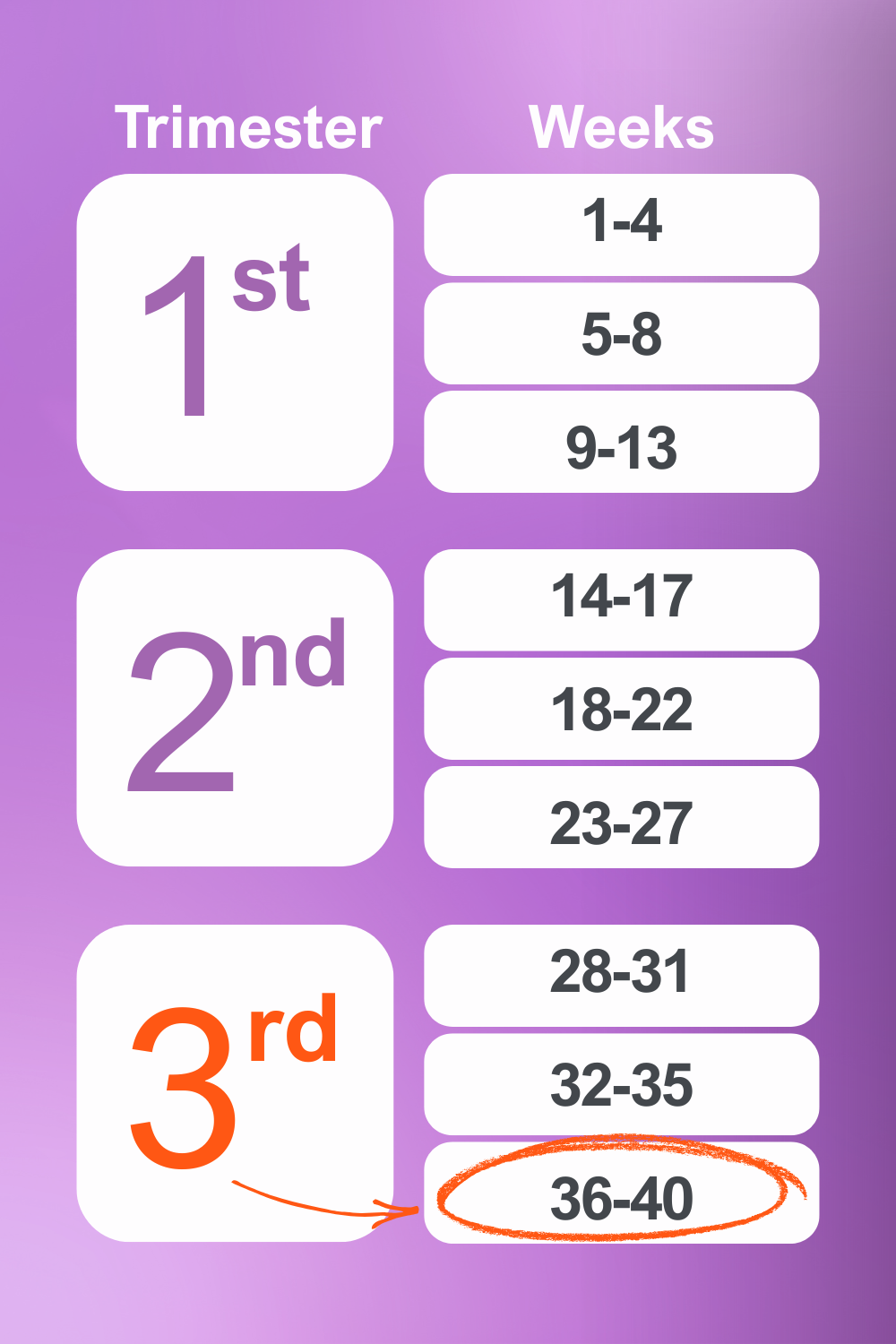
38-40 Weeks: Baby is ready for birth; firm grasp and developed reflexes.
Summary:
By 38-40 weeks, your baby is fully developed and ready for birth, with a firm grasp, strong reflexes, and a rapidly growing brain. Most of the fine hair (lanugo) has disappeared, and their skin is coated in vernix to protect it before delivery. For you, this stage often brings increased pelvic pressure, backache, and stronger Braxton Hick contractions as the body prepares for labour. Common signs that birth is near include a '"show" (mucus plug), waters breaking, and regular contractions, while fatigue and discomfort are typical, although some women experience a burst of energy. These final days can feel long, but they’re filled with excitement and anticipation. Your baby is almost here, and the incredible journey of meeting them is just around the corner.
At this stage, your body is in full preparation mode for labour and birth. Your cervix begins to soften and thin (efface), and you may lose the mucus plug known as a "show", which protected your baby during pregnancy. This gradual change (effacement) often precedes labour, even before contractions begin. Some women feel mild cramping or “period-like” sensations as this happens. Hormonal changes trigger stronger and more frequent Braxton Hicks contractions, which help your uterus get ready for real labour. Your uterus is at its largest size, pressing on your bladder and other organs, which can cause frequent urination, backache, and pelvic pressure.
Many women notice swelling in their feet and ankles due to extra fluid and changes in blood flow, and ligaments remain softened from pregnancy hormones, which can make joints feel looser. You might also experience heartburn, breathlessness, and fatigue, while some women feel a sudden burst of “nesting” energy. These changes are all signs that your body is gearing up for birth, and labour could start at any time between now and 42 weeks.
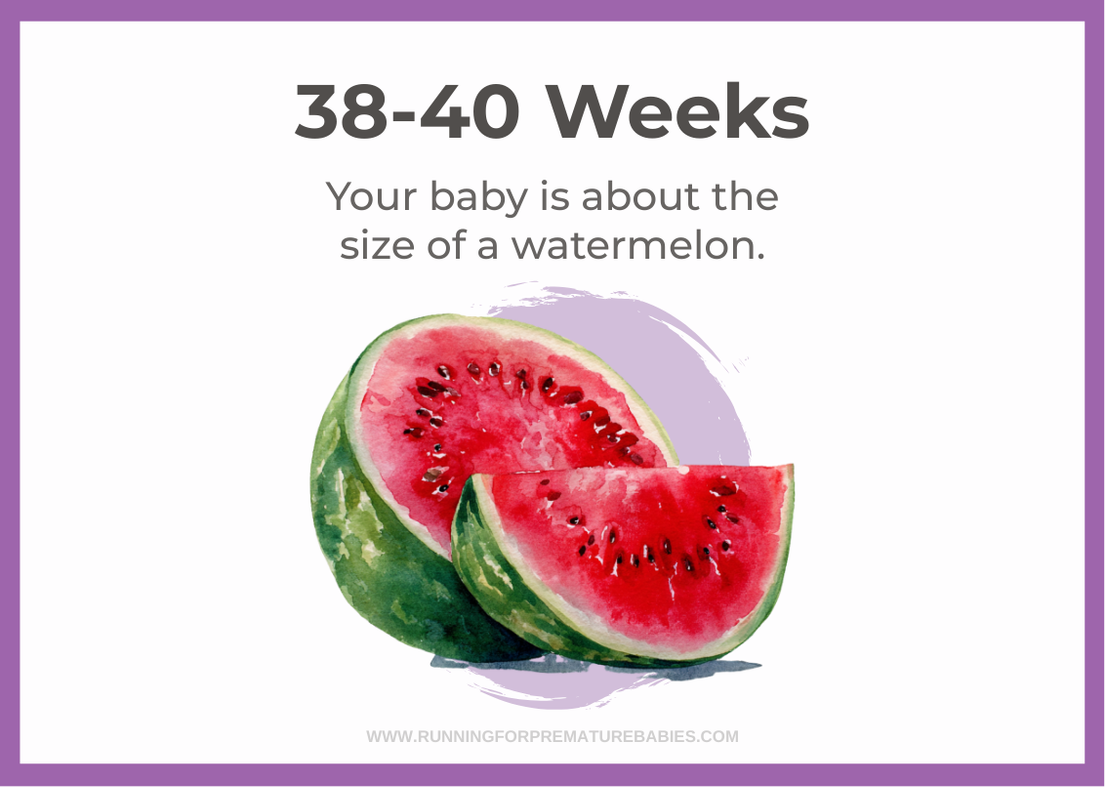
By 38-40 weeks, your baby is considered full term and ready for birth. They can weigh between 3.2-3.6 kg and measure about 50 cm long from head to toe. Most of the fine hair (lanugo) that once covered their body has disappeared, but they may still have some, along with a coating of vernix, a creamy substance that protects their skin in the womb. Their lungs are mature, and they are practicing breathing movements by inhaling and exhaling amniotic fluid. The brain and nervous system are well developed, and reflexes like sucking and grasping are strong, which will help with feeding after birth. Your baby’s head is likely engaged in your pelvis, and they continue to gain fat to regulate body temperature after delivery. Inside their bowel, meconium (their first poo) has formed and may sometimes be passed during labour, which requires monitoring.
This information has been reviewed by Neonatologist, Dr John Smyth MBChB, FRACP FRCPCH.
See FAQs Below
Get Involved
Run with us
Donate
Join the Premmie Marathon Challenge
FAQs
At 38-40 weeks, how will I know if I am in labour?
The clearest sign is regular, strong contractions that get longer, stronger, and closer together, and don’t ease when you change position or rest. You might also notice your waters breaking, which can be a gush or a slow trickle, and a ‘show’, which is a pink or blood-stained mucus discharge as your cervix begins to open. Some women feel extra pelvic pressure, backache, or even mild cramps as their body gets ready. If your contractions are regular and about five minutes apart, your waters break, or you’re worried about anything, call your midwife or hospital. These changes mean your body is doing exactly what it’s meant to, and you’re close to meeting your baby.
When to seek help immediately:
- Your waters break and fluid is green, smelly, or tinged with blood.
- You have regular contractions (eg 5 minutes apart or stronger).
- You experience heavy bleeding or severe pain.
- You notice reduced or absent fetal movement.
- You develop fever, chills or signs of infection.
What are the signs my waters have broken?
When your waters break, the amniotic sac around your baby ruptures, releasing the fluid that has protected your baby during pregnancy. This usually happens during labour, but it can occur before contractions start. It can be a gush of fluid or a slow trickle that you can’t control. Many women describe it as feeling like they’ve wet themselves, but the fluid is different from urine.
If your waters break, the fluid is usually clear or slightly pink/yellow and may have a sweet smell (unlike urine, which smells stronger). If the fluid is green or brown, it could mean your baby has passed meconium (their first stool), which needs immediate medical attention. Put on a sanitary pad (not a tampon) and note the colour, smell, and amount, then call your midwife or hospital right away, even if contractions haven’t started. Go straight to hospital if the fluid is green, brown, foul-smelling, or if you have a fever or notice reduced baby movements.
If you're uncertain whether your waters have broken, avoid using tampons or internal checks, and instead call your midwife or hospital for guidance. They may ask you to come in for assessment or tests to confirm.
At 38-40 weeks, how can I bring labour on naturally?
There are no guaranteed methods to start labour naturally, and your baby will usually come when ready. Here are some natural methods you could try:
- Stay active: Gentle walking, swimming, or yoga can help your baby move into position and maintain good hormone balance for labour.
- Nipple stimulation: Lightly rolling or massaging your nipples for short periods can release oxytocin, the hormone that triggers contractions. Do this gently and stop if you feel discomfort.
- Sex (if safe for you): Semen contains prostaglandins, which may help soften the cervix, and orgasm can stimulate uterine contractions.
- Raspberry leaf tea: Drinking this herbal tea in the final weeks may tone the uterus and prepare it for labour (although evidence is limited).
- Stretch and sweep (by your midwife): A membrane sweep can help release hormones that start labour. It’s usually offered close to or after your due date and is optional.
How long after the “show” will labour start?
If you notice a “show” (a pink or blood-stained mucus discharge) it’s a sign your body is getting ready for birth, but it doesn’t mean labour will start right away. For some women, labour begins within a few hours or days, while for others it can take a week or more. Every pregnancy is different, so try not to worry if things don’t happen immediately. Keep an eye out for other signs like regular, strong contractions or your waters breaking, and if you’re ever unsure or concerned, call your midwife or doctor for reassurance.
What happens if I go past my due date?
It’s completely normal to go past your due date, in fact, only about 5% of babies arrive exactly on schedule. Most babies are born between 37 and 42 weeks, and your healthcare team will keep a close eye on you and your baby if you go beyond 40 weeks. If labour hasn’t started by 41 weeks, your doctor or midwife may recommend extra monitoring, such as ultrasounds and heart rate checks, to make sure everything is going well. If you reach 41-42 weeks, they might suggest a membrane sweep or induction to reduce the small but increasing risks of complications, such as the placenta not working as effectively. Remember, these steps are taken to keep you and your baby safe, and your care team will guide you through every option, so you feel supported and informed.
Super quick hospital checklist:
- For healthcare professionals: Your pregnancy health record
- For you: Comfy clothes, nightie, undies and toiletries
- For baby: Nappies, wraps, and clothes
Self-care tips in these final days
- Rest often, and conserve energy.
- Eat small, nutritious meals and hydrate well.
- Use warm baths or gentle stretching to ease discomfort.
- Practice breathing, visualisation or meditation.
- Lean on your support network and ask for help with chores or errands.
- Keep your hospital bag, car seats, and essentials ready.
Related reading:
First Trimester
What to expect when you're 3-4 weeks pregnant
What to expect when you're 5 weeks pregnant
What to expect when you're 6-9 weeks pregnant
What to expect when you're 10 weeks pregnant
What to expect when you're 12 weeks pregnant
What to exprect when you're 14 weeks pregnant
Second Trimester
What to expect when you're 18 weeks pregnant
What to expect when you're 20 weeks pregnant
What to expect when you're 22-23 weeks pregnant
What to expect when you're 24 weeks pregnant
What to expect when you're 26-27 weeks pregnant
Third Trimester
What to expect when you're 28 weeks pregnant
What to expect when you're 29 weeks pregnant
What to expect when you're 30 weeks pregnant
What to expect when you're 32-33 weeks pregnant
What to expect when you're 34 weeks pregnant
What to expect when you're 36 weeks pregnant
What to expect when you're 37 weeks pregnant
What to expect when you're 38-40 weeks pregnant
Disclaimer: This information by Running for Premature Babies Foundation is educational and informative in nature and is not medical advice or a healthcare recommendation. For further information, please seek professional medical advice from a qualified healthcare provider.
References:
Pregnancy, Birth and Baby. (2023). Natural ways to bring on labour. Retrieved from https://www.pregnancybirthbaby.org.au Retrieved 29th September 2025
Western Sydney Local Health District. (2021). Natural ways to bring on labour (Fact sheet). NSW Health. Retrieved from https://www.wslhd.health.nsw.gov.au/ArticleDocuments/1346/Natural%20ways%20to%20bring%20on%20labour%20V4.pdf.aspx Retrieved 29th September 2025
Pregnancy, Birth and Baby. (2023). Overdue. Retrieved from https://www.pregnancybirthbaby.org.au/overdue
Better Health Channel. (2023). Overdue babies. Retrieved from https://www.betterhealth.vic.gov.au/health/servicesandsupport/overdue-babies