
Key Milestone Weeks in Pregnancy
Third Trimester
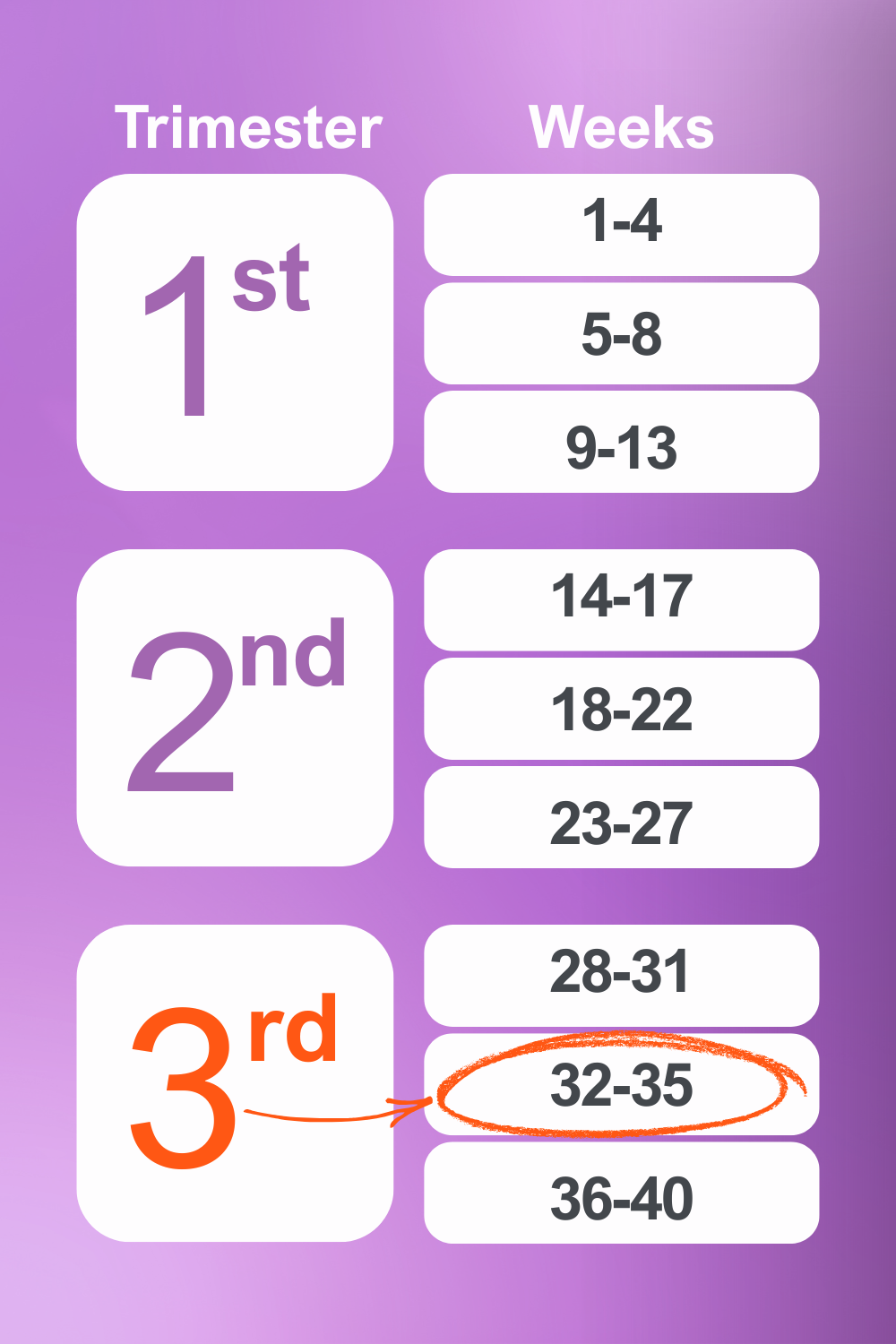
32-33 Weeks: Baby is plumping up; bones harden; can detect light.
Summary:
At 32-33 weeks of pregnancy, your baby is growing rounder and stronger, with fat accumulating under the skin to help regulate body temperature after birth. Their bones are hardening, although the skull remains soft to ease delivery, and they’re now able to detect light filtering through the womb, responding to changes in brightness. You might be feeling mix of excitement and physical intensity. Movements may feel more pronounced as space tightens, and you may notice shifts in the baby’s position. It’s a time of rapid development and increasing connection, as you prepare for the final stretch before birth.
At 32-33 weeks pregnant, your body is undergoing several changes as it prepares for birth. You may feel more breathless due to your growing uterus pressing against your lungs, and your belly button may stretch or protrude. Common discomforts like backache, pelvic pain, leg cramps, heartburn, and swelling in your feet and legs tend to intensify during this stage. The weight of your baby can also affect your bladder and bowel, leading to frequent urination, incontinence, or haemorrhoids. Resting often and doing daily pelvic floor exercises can help manage these symptoms. You might also notice more Braxton Hicks contractions and feel your baby moving less actively due to limited space in the womb. Monitoring your baby’s movement patterns is important, any sudden changes should be discussed with your healthcare provider.

At 32-33 weeks pregnant what is happening with my baby?
At 32–33 weeks pregnant, your baby is about 1.7-2.2 kgs in weight and 42-44 cm long. Baby is becoming more rounded as fat continues to build beneath the skin, helping regulate body temperature after birth. Their bones are hardening, though the skull remains soft and flexible to help them through the birth canal. Your baby’s eyes are now sensitive to light, and they may turn toward bright sources outside the womb. Internally, their brain and nervous system are fully developed, and they’re practicing essential reflexes like sucking and swallowing. Most babies are now in a head-down position, and their weight is increasing rapidly, preparing them for life outside the womb.
This information has been reviewed by Neonatologist, Dr John Smyth MBChB, FRACP FRCPCH.
See FAQs Below
Get Involved
Run with us
Donate
Join the Premmie Marathon Challenge
FAQs
At 32-33 weeks, should my baby be head-down by now?
At 32-33 weeks pregnant, it's common for your baby to be in the head-down position, which is ideal for birth. Most babies are head-down by 32 weeks, although some may still be in the breech position (bottom or feet first). If your baby hasn’t turned yet, there’s still time and many babies shift into the head-down position in the final weeks of pregnancy. Your healthcare provider will monitor your baby’s position and may suggest options like an ultrasound or external cephalic version (ECV) later on if needed.
What vaccinations should I get now?
At 32-33 weeks pregnant, several vaccinations are recommended to protect both you and your baby.
Whooping Cough (Pertussis)
- Recommended between 20 and 32 weeks of pregnancy.
- Helps pass protective antibodies to your baby, shielding them in the first few months of life when they’re most vulnerable.
Influenza (Flu)
- Can be given at any time during pregnancy.
- Protects against flu-related complications such as hospitalisation and premature birth, and also helps protect your baby after birth.
Respiratory Syncytial Virus (RSV)
- Recommended between 28 and 36 weeks.
- A single-dose vaccine that helps protect your baby from RSV-related complications like bronchiolitis and pneumonia.
COVID-19
- Can be administered at any stage of pregnancy.
- If you haven’t been vaccinated or it’s been over 12 months since your last dose, a booster may be recommended.
Always consult your GP, midwife, or immunisation provider to confirm what’s right for you.
What symptoms or discomforts are common at 32-33 weeks pregnant?
Breathlessness: Your growing uterus presses against your lungs, making it harder to take deep breaths.
Backache and Pelvic Pain: Increased weight and posture changes can cause discomfort in your lower back and hips. Pelvic girdle pain is also common.
Swelling (Oedema): Mild swelling in your feet and ankles is normal, but sudden or severe swelling—especially in your hands or face—should be checked for signs of pre-eclampsia.
Heartburn and Indigestion: Hormonal changes and pressure from your uterus can lead to reflux and discomfort after eating.
Constipation and Haemorrhoids: Slower digestion and pressure on your bowel can cause constipation, which may lead to haemorrhoids.
Leg Cramps: Often occurring at night, these are caused by changes in circulation and muscle fatigue.
Frequent Urination: Your baby’s position and increased pressure on your bladder can lead to more frequent trips to the bathroom.
Fatigue and Sleep Disruption: Discomfort, frequent urination, and anxiety about birth can affect sleep quality.
Emotional Changes: Anxiety, mood swings, and feeling overwhelmed are common. If these persist, speak to your healthcare provider.
If you experience severe pain, bleeding, blurred vision, or reduced baby movements, contact your healthcare provider immediately as these may be signs of complications.
Is it too early to pack my hospital bag?
It’s not too early to pack your hospital bag, in fact, packing your bag around 32 weeks is a good idea so you’re prepared in case labour starts early or you need to go to hospital unexpectedly. Packing early helps reduce stress and ensures you have everything you need, including:
- Your pregnancy health record
- Comfortable clothes and toiletries
- Maternity sanitary pads or period-proof underwear
- Items for labour (e.g. snacks, lip balm, water bottle)
- Essentials for your baby (nappies, wraps, clothes)
- Breastfeeding-friendly tops and maternity bras
- Birth plan, phone charger, Bluetooth speaker or other comfort items
What are signs of premature labour?
Regular contractions: Tightening of the uterus that becomes more frequent and painful, unlike Braxton Hicks which are irregular and mild.
Lower back pain: Persistent or rhythmic pain that doesn’t ease with rest.
Pelvic pressure: A feeling that the baby is pushing down or increased pressure in the pelvis.
Vaginal bleeding or spotting: Any bleeding should be reported immediately.
Waters breaking (rupture of membranes): A gush or trickle of clear fluid from the vagina.
Change in vaginal discharge: Increase in discharge or mucus plug loss (known as a “show”).
Reduced baby movements: A noticeable decrease in your baby’s usual movement pattern.
Abdominal cramps or pain: Similar to menstrual cramps, especially if they come and go regularly.
If you experience any of these symptoms, contact your midwife, doctor, or hospital immediately. Some premature labours can be delayed or managed with medical support, which improves outcomes for both mother and baby.
What happens if my baby is born at 32 or 33 weeks?
Babies born at this stage are considered “moderate to late preterm.” Many can breathe on their own but may need help with feeding, temperature regulation, and jaundice treatment. With specialised care in a neonatal unit, most babies born at this stage go on to thrive. Outcomes improve significantly with every extra week spent in the womb, so if preterm labour is detected, medical support may aim to delay birth.
Related reading:
First Trimester
What to expect when you're 3-4 weeks pregnant
What to expect when you're 5 weeks pregnant
What to expect when you're 6-9 weeks pregnant
What to expect when you're 10 weeks pregnant
What to expect when you're 12 weeks pregnant
What to exprect when you're 14 weeks pregnant
Second Trimester
What to expect when you're 18 weeks pregnant
What to expect when you're 20 weeks pregnant
What to expect when you're 22-23 weeks pregnant
What to expect when you're 24 weeks pregnant
What to expect when you're 26-27 weeks pregnant
Third Trimester
What to expect when you're 28 weeks pregnant
What to expect when you're 29 weeks pregnant
What to expect when you're 30 weeks pregnant
What to expect when you're 32-33 weeks pregnant
What to expect when you're 34 weeks pregnant
What to expect when you're 36 weeks pregnant
What to expect when you're 37 weeks pregnant
What to expect when you're 38-40 weeks pregnant
Disclaimer: This information by Running for Premature Babies Foundation is educational and informative in nature and is not medical advice or a healthcare recommendation. For further information, please seek professional medical advice from a qualified healthcare provider.
References:
Pregnancy, Birth and Baby. (n.d.). Pregnancy at week 32. Australian Government Department of Health and Aged Care. https://www.pregnancybirthbaby.org.au/pregnancy-at-week-32. Retrieved 28th September 2025
Raising Children Network. (n.d.). 32 weeks pregnant. https://raisingchildren.net.au/pregnancy/week-by-week/third-trimester/32-weeks Retrieved 28th September 2025