
Key Milestone Weeks in Pregnancy
Third Trimester

30 Weeks: Hair grows; eyes open fully; rapid weight gain begins.
Summary:
At 30 weeks pregnant, your baby’s rapid weight gain phase begins, as fat stores build up under the skin, making it look smoother. Fine body hair (lanugo) starts to disappear, and more hair may grow on the head. Their eyes are now fully open and reflexes like thumb-sucking develop. Meanwhile, you may feel increasingly tired and sore due to your growing belly and stretched ligaments. You might experience disrupted sleep and heartburn, and your body now carries twice the normal amount of blood. Gentle exercise, support cushions, and maternity belts can help ease discomfort and support your wellbeing.
At 30 weeks pregnant, your body is undergoing several changes to support your growing baby. As your baby gains weight, your ligaments stretch, which can cause backache and make it uncomfortable to sit or stand for long periods. You now have twice the normal amount of blood in your body, and your doctor will monitor your blood pressure closely to check for conditions like pre-eclampsia, which can develop without symptoms. You may also notice changes in balance due to relaxed ligaments, increasing your risk of injury.
Gentle exercise like walking, swimming, or stationary cycling is recommended to maintain energy and prepare for labour. Supportive measures like flat shoes, cushions, and maternity belts can help ease discomfort. Despite feeling tired or sore, staying active and attending regular antenatal appointments is important for your health and your baby’s wellbeing.
How to ease discomfort at 30 weeks pregnant:
- Support belts and cushions: These reduce strain on your back and pelvis and can help you sleep more comfortably
- Stay hydrated: Drinking plenty of water helps with swelling and digestion
- Gentle stretching or yoga: Can relieve muscle tightness and promote circulation
- Warm (not hot) baths: Help relax muscles and ease soreness in your lower back
- Compression socks: Reduce swelling in the legs and prevent varicose veins
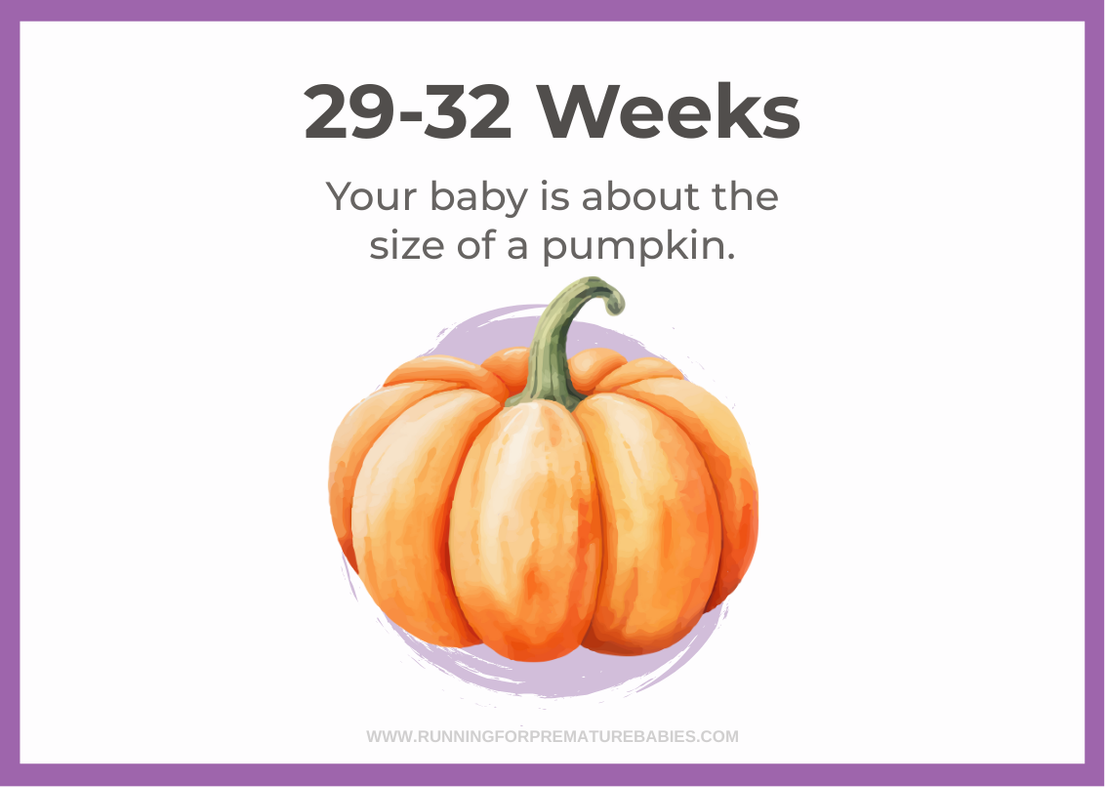
At 30 weeks pregnant, your baby is around 40 cm and weighs about 1.3-1.5 kg. This week marks the start of rapid weight gain for baby, as fat begins to build up under the skin, helping regulate body temperature and giving your baby a plumper appearance. Hair growth increases, especially on the head, while the fine body hair (lanugo) starts to fade. Your baby’s eyes are now fully open, and they’re practising blinking and responding to light. These developments reflect growing maturity in the nervous system and physical readiness for life outside the womb.
This information has been reviewed by Neonatologist, Dr John Smyth MBChB, FRACP FRCPCH.
See FAQs Below
Get Involved
Run with us
Donate
Join the Premmie Marathon Challenge
FAQs
At 30 weeks pregnant, what symptoms should I report to my doctor?
At 30 weeks pregnant, there are several symptoms you should report to your doctor or midwife immediately, as they may indicate a complication. These include:
- Reduced baby movement: If your baby is moving less than usual, this can be a sign they are not well.
- Bleeding from your vagina: This could indicate placenta issues or other complications.
- Severe abdominal pain: Especially if it’s sudden or persistent.
- Blurred vision, swelling, or a bad headache: These may be signs of pre-eclampsia, a serious pregnancy condition.
- Clear fluid leaking from your vagina: This could be a sign your waters have broken early.
- Shortness of breath or a racing heartbeat: These may indicate cardiovascular strain or other issues.
- Pain or swelling in one leg: This could be a sign of deep vein thrombosis (DVT).
- Fever or chills: May indicate infection.
- Emotional distress lasting more than two weeks: Persistent anxiety, sadness, or inability to cope should be discussed with your care provider.
If anything feels “off” or you’re unsure, it’s always best to check with your doctor or health practitioner.
At 30 weeks pregnant, should I have birth plan in place?
While there’s no strict deadline, having a plan in place now gives you time to think through your preferences, discuss them with your midwife or doctor, and make adjustments if needed. Birth plans are flexible, and they’re guides, not guarantees. You can change your mind at any time, even during labour. A list of things you could start thinking about include:
- Who you want present during labour.
- Preferences for managing pain.
- Cultural or personal practices.
- Medical interventions you’d like to avoid.
- Post-birth choices (e.g. skin-to-skin contact, feeding preferences).
Is antenatal education helpful at 30 weeks?
Yes, attending antenatal or prenatal classes now can be helpful. These classes prepare you and your partner for labour, birth, and early parenting. You’ll learn about pain relief options, breastfeeding, baby care, and what to expect emotionally. Many hospitals and private providers offer in-person or online options tailored for different birth choices.
Should I be preparing baby gear like a car seat?
At 30 weeks pregnant, it’s a good idea to start preparing essential baby gear and one of the most important items is a car seat. Before your baby arrives, you’ll need to have a child car restraint (baby capsule) correctly installed in your vehicle. This is not only essential for safety but also a legal requirement in Australia. Babies under 6 months must be seated in a rearward-facing child restraint with an inbuilt harness
Other gear to prepare includes:
- Cot or bassinet (meeting Australian safety standards)
- Feeding equipment (bottles, steriliser, formula if not breastfeeding)
- Nappies and changing station
- Baby clothes and wraps
- Bathing supplies (baby bath, towels, washcloths)
- Pram or stroller
- Storage solutions for baby items
You don’t need to buy everything new. Borrowing or buying second-hand (safely) is common and cost-effective. Many parents find it helpful to use a checklist to stay organised.
Tip: When setting up your nursery or buying baby gear, always check that items meet current Australian safety standards. Avoid older or recalled products, and ensure your baby’s sleep environment is free from loose blankets, pillows or toys.
What should I do if I am feeling anxious or emotional?
If you're feeling anxious or emotional at 30 weeks pregnant, you're not alone. It's a common experience during the third trimester. This can be due to hormonal changes, physical discomfort, sleep disruption, and the emotional weight of preparing for birth and parenthood. These feelings are common, but if they become overwhelming or persist for more than two weeks, it’s important to speak with your doctor or midwife. Support is available through services like PANDA (Perinatal Anxiety & Depression Australia) and Beyond Blue, which offer confidential help and resources.
You can also use mental health screening tools like the Edinburgh Postnatal Depression Scale (EPDS), which your midwife or GP may offer, to better understand how you're feeling and whether further support could help.
Related reading:
First Trimester
What to expect when you're 3-4 weeks pregnant
What to expect when you're 5 weeks pregnant
What to expect when you're 6-9 weeks pregnant
What to expect when you're 10 weeks pregnant
What to expect when you're 12 weeks pregnant
What to exprect when you're 14 weeks pregnant
Second Trimester
What to expect when you're 18 weeks pregnant
What to expect when you're 20 weeks pregnant
What to expect when you're 22-23 weeks pregnant
What to expect when you're 24 weeks pregnant
What to expect when you're 26-27 weeks pregnant
Third Trimester
What to expect when you're 28 weeks pregnant
What to expect when you're 29 weeks pregnant
What to expect when you're 30 weeks pregnant
What to expect when you're 32-33 weeks pregnant
What to expect when you're 34 weeks pregnant
What to expect when you're 36 weeks pregnant
What to expect when you're 37 weeks pregnant
What to expect when you're 38-40 weeks pregnant
Disclaimer: This information by Running for Premature Babies Foundation is educational and informative in nature and is not medical advice or a healthcare recommendation. For further information, please seek professional medical advice from a qualified healthcare provider.
References:
Pregnancy, Birth and Baby. (n.d.). 30 weeks pregnant. Australian Government. Retrieved from https://www.pregnancybirthbaby.org.au/30-weeks-pregnant. Retrieved 15th September 2025
Healthdirect Australia. (n.d.). Warning signs during pregnancy. Retrieved from https://www.healthdirect.gov.au/warning-signs-during-pregnancy Retrieved 15th September 2025