
Key Milestone Weeks in Pregnancy
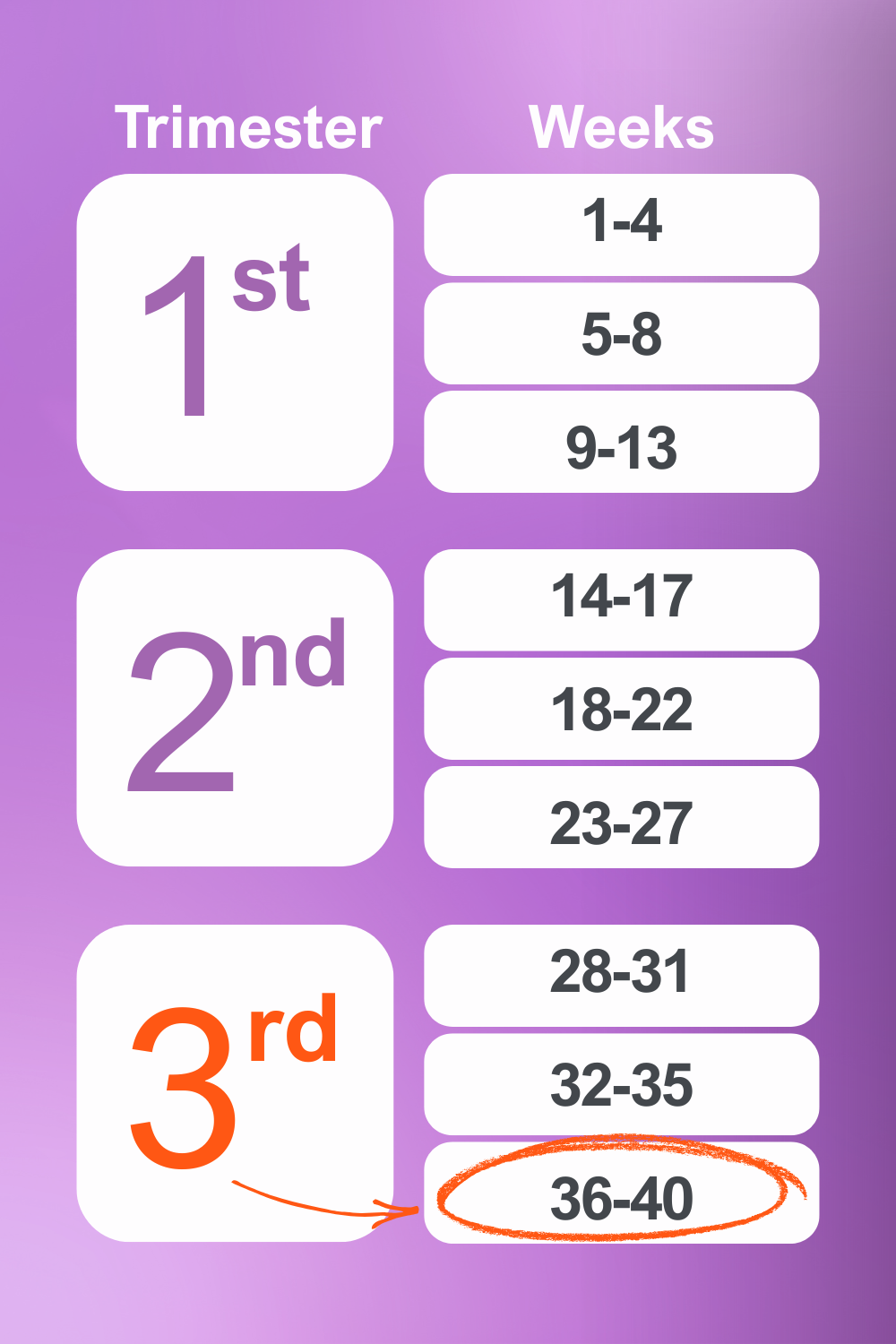
Third Trimster
Summary:
At 37 weeks pregnant, your baby is now considered “early term” and looks very much like a newborn. Your baby continues to gain weight steadily. Their brain and lungs are still maturing, and they now have a firm hand grip and may hiccup frequently, which you can feel as little jumps in your belly. For you, this stage often brings trouble sleeping, frequent trips to the toilet, and increased vaginal discharge. You may also feel emotionally low or anxious at times, which is normal, but if these feelings persist, it’s important to seek support. Resting during the day and sleeping on your side can help improve comfort and reduce risks as you approach labour.
At 37 weeks pregnant, your body is preparing for labour and birth in several noticeable ways. Your baby may now be engaged, meaning their head has moved down into your pelvis, especially if this is your first pregnancy. This can relieve pressure on your lungs, making breathing easier, but may increase pelvic pressure and the need to urinate more frequently. You may also notice your cervix softening and thinning (effacement) as your body prepares for labour. This, paired with increased Braxton Hicks activity, can cause sensations like cramping or pressure. It’s normal but if something feels unusually sharp or persistent, seek medical advice.
You might also notice your breasts leaking colostrum, the first milk, and may choose to begin expressing and storing it. Many people experience period-like cramps, backache, or diarrhoea, which can be early signs of labour. Sleep disturbances are common due to frequent toilet trips and baby movements. You may also feel emotionally low or anxious. If these feelings persist, it’s important to seek support. Every labour is different, and while some signs may appear now, others may not show until closer to 40 weeks.
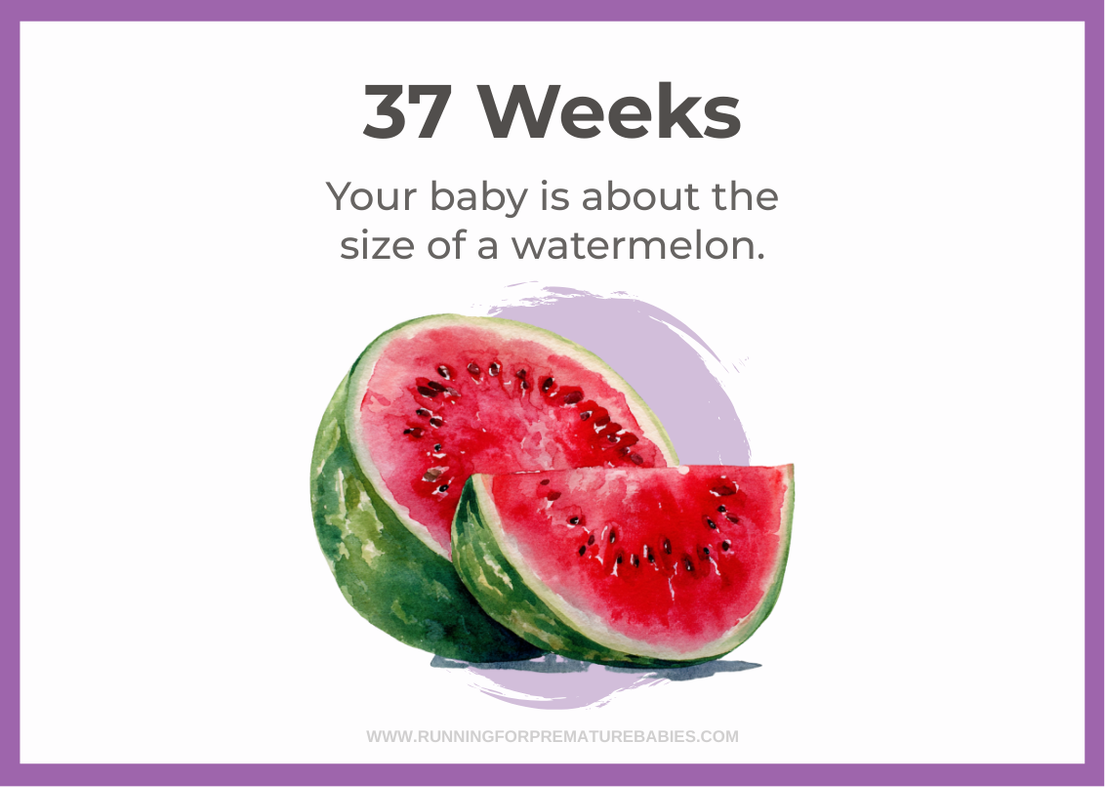
At 37 weeks pregnant, your baby is about the size of a small watermelon and weighs around 2.9 kgs and is about 48 cm in length. They are now considered full-term, meaning they are developed enough to be born safely. Their skin is smoother, fat stores continue to thicken, and reflexes like gripping, swallowing, and responding to touch or sound are well established. Your baby’s lungs and brain continue to mature, and they can grip firmly with their hands. Their digestive system is still developing and won’t be fully mature until after birth, but their gut now contains meconium, the sticky green substance that will become their first poo. Your baby should continue to move in a regular pattern, even during labour, and any noticeable decrease in movement should be reported to your healthcare provider as soon as possible.
This information has been reviewed by Neonatologist, Dr John Smyth MBChB, FRACP FRCPCH.
See FAQs Below
Get Involved
Run with us
Donate
Join the Premmie Marathon Challenge
FAQs
Can I still work at 37 weeks pregnant?
Yes, you can generally keep working at 37 weeks pregnant in Australia, provided your job is safe and your doctor agrees. Here are the key points:
Your rights and options:
No law forces you to stop at 37 weeks. Many women work until 36–38 weeks or even until labour if they feel well and the work is safe.
- Parental leave: You can start unpaid parental leave up to 6 weeks before your due date (or earlier if your employer agrees).
- Medical clearance: If you want to work within 6 weeks of your due date, your employer can request a medical certificate confirming you’re fit for work.
- Safe job entitlement: If your usual duties are unsafe (e.g., heavy lifting, long standing, exposure to hazards), your employer must offer a safe alternative role with the same pay. If none exists, you may be entitled to paid “no safe job” leave.
- Special parental leave: If you have a pregnancy-related illness and can’t work, you can take unpaid special parental leave without reducing your main parental leave entitlemen.
Health & safety considerations:
- Employers must do a risk assessment and adjust your duties if needed (e.g., reduce heavy lifting, allow more breaks, avoid long hours).
- If your job involves hazards like chemicals, excessive travel, or physically exhausting work, adjustments or leave may be necessary.
Can I express colostrum before birth at 37 weeks pregnant?
Yes, you can express colostrum before birth at 37 weeks pregnant, and it may be especially helpful in certain situations. Expressing colostrum can be beneficial if:
- You want to store milk for use after birth.
- Your baby may need extra support feeding (e.g. if they’re expected to be small or have medical needs).
- You have gestational diabetes, and your baby may need help maintaining blood sugar levels after birth.
Colostrum is the first milk your body produces, rich in antibodies and nutrients, and can be expressed by hand or with a pump. It’s recommended to speak with your midwife, lactation consultant, or child and family health nurse before starting, especially to learn proper technique and storage guidelines. Expressed colostrum can be stored in sterile containers or syringes and frozen for later use.
Colostrum Expression Tips (if recommended by your midwife):
- Use clean hands or a breast pump, following sterile technique.
- Express gently for 1-2 minutes per breast, 2-3 times per day.
- Label, refrigerate or freeze in small volumes (0.5-2 mL in syringe or small containers).
- Thaw gently (in warm water) and never re-freeze.
- Keep your midwife/lactation consultant informed about amounts and technique.
What should I do to prepare for labour?
- Pack your hospital bag
Include essentials like your pregnancy health record, comfortable clothes, toiletries, maternity pads, baby clothes, nappies, and snacks. - Review your birth plan
Discuss your preferences for pain relief, support people, and interventions with your care provider. - Practice relaxation techniques
Breathing exercises, meditation, and gentle movement (like yoga or walking) can help you stay calm and focused. - Know the signs of labour
Learn what to expect - like contractions, waters breaking, and the “show” - so you know when to contact your hospital or midwife. - Organise support
Make sure your birth partner or support person knows what to do and how to help during labour. - Prepare your home
Stock your fridge, wash baby clothes, and set up your sleeping and feeding space. - Rest and nourish your body
Eat well, stay hydrated, and rest when you can.
Include relaxation techniques like breathing exercises, gentle stretching, or guided visualisations. Emotional preparation - like talking through fears or birth preferences - can help you feel more confident as your due date approaches.
At 37 weeks pregnant, what are signs of labour?
- Cramps or period-like pain: Mild cramping in the lower abdomen or back may signal early labour.
- Backache or pelvic pressure: Increased discomfort or heaviness as the baby moves lower into the pelvis.
- Diarrhoea or loose bowel movements: A common sign that your body is preparing for birth.
- Waters breaking: This may be a gush or a slow leak of amniotic fluid.
- A “show”: Blood-stained or pink mucus discharge, indicating the cervix is starting to open.
- Regular contractions: Contractions that become stronger, longer, and more frequent are a sign that labour has started.
- Nesting instinc: A sudden burst of energy and urge to clean or organise may occur just before labour begins.
If you experience any of these signs, especially waters breaking or regular contractions, contact your midwife, doctor, or hospital immediately.
Quick hospital checklist:
- Your pregnancy health record
- Comfortable clothes, night clothes, undies and toiletries
- Baby essentials, nappies, wraps, and clothes
- Phone and phone charger, water bottle, essential oils, eye mask and other comfort items
- Extra underwear or maternity pads
- Snacks + electrolyte drinks
- A copy of your birth preferences
Related reading:
First Trimester
What to expect when you're 3-4 weeks pregnant
What to expect when you're 5 weeks pregnant
What to expect when you're 6-9 weeks pregnant
What to expect when you're 10 weeks pregnant
What to expect when you're 12 weeks pregnant
What to exprect when you're 14 weeks pregnant
Second Trimester
What to expect when you're 18 weeks pregnant
What to expect when you're 20 weeks pregnant
What to expect when you're 22-23 weeks pregnant
What to expect when you're 24 weeks pregnant
What to expect when you're 26-27 weeks pregnant
Third Trimester
What to expect when you're 28 weeks pregnant
What to expect when you're 29 weeks pregnant
What to expect when you're 30 weeks pregnant
What to expect when you're 32-33 weeks pregnant
What to expect when you're 34 weeks pregnant
What to expect when you're 36 weeks pregnant
What to expect when you're 37 weeks pregnant
What to expect when you're 38-40 weeks pregnant
Disclaimer: This information by Running for Premature Babies Foundation is educational and informative in nature and is not medical advice or a healthcare recommendation. For further information, please seek professional medical advice from a qualified healthcare provider.
References:
Pregnancy, Birth and Baby. (n.d.). 37 weeks pregnant. Australian Government. Retrieved from https://www.pregnancybirthbaby.org.au/37-weeks-pregnant?cite?turn7search35?. Retrieved 30th September 2025
Fair Work Ombudsman. (n.d.). Employment contracts. Australian Government. Retrieved from https://www.fairwork.gov.au/employment-conditions/employment-contracts [Employment...Ombudsman]
Services Australia. (n.d.). Exceptions to the work test for Parental Leave Pay. Australian Government. Retrieved from https://www.servicesaustralia.gov.au/exceptions-to-work-test-for-parental-leave-pay?context=64479 [Exceptions...Australia] Healthdirect Australia
Healthdirect Australia. (n.d.). Talking to your employer about illness. Retrieved from https://www.healthdirect.gov.au/talking-to-your-employer-about-illness Retrieved 29th September