

Key Milestone Weeks in Pregnancy
Third Trimester

29 Weeks: Kicking and stretching increase; muscles and lungs mature.
Summary:
At 29 weeks pregnant, your baby is growing rapidly with most organs functioning well and lungs maturing as they practise breathing in a regular rhythm. Their bone marrow is producing red blood cells, and they’re becoming more active with noticeable kicks and stretches. Meanwhile, your body is adapting to the extra weight and pressure from the growing uterus, which can cause breathlessness, fatigue, and disrupted sleep. Side sleeping is recommended to improve blood flow and reduce the risk of stillbirth, and gentle exercise can help ease discomfort and prepare for birth.
At 29 weeks pregnant, your body is adapting to the rapid growth of your baby, which can cause a range of physical changes and discomforts. Your uterus is pressing against internal organs like your diaphragm and lungs, often leading to breathlessness. Sleep may become more difficult due to discomfort and fatigue, and side sleeping is recommended to reduce the risk of stillbirth. You might also experience back pain, swelling in your feet and ankles, and increased pressure on your bladder, causing more frequent urination. Gentle exercise like swimming or pregnancy yoga can help ease these symptoms and support your overall wellbeing.
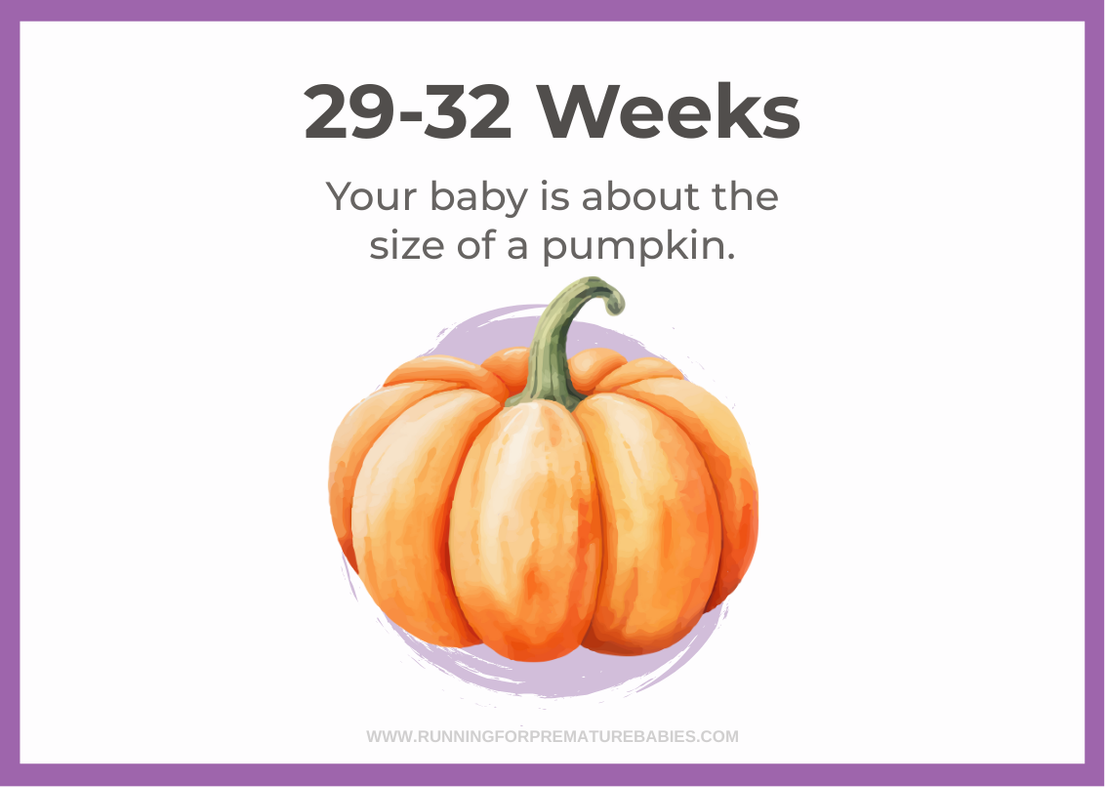
At 29 weeks pregnant, your baby is about 39-40 cm long from head to toe and weighs around 1.2-1.4 kg. Their muscles are strengthening, allowing for more frequent and powerful kicking and stretching, which you’ll likely feel more clearly.
The lungs are maturing, and your baby is practising breathing movements in a regular rhythm, although they’re not yet fully developed for life outside the womb. The bone marrow has taken over the production of red blood cells, and their eyes can open, complete with eyelashes. These developments mark a key stage in preparing your baby for birth.
This information has been reviewed by Neonatologist, Dr John Smyth MBChB, FRACP FRCPCH.
See FAQs Below
Get Involved
Run with us
Donate
Join the Premmie Marathon Challenge
FAQs
At 29 weeks pregnant, is it normal to feel breathless and tired?
As your baby grows, your uterus expands and presses against your diaphragm and lungs, which can cause shortness of breath. This is a common experience in the third trimester. However, if you feel very out of breath, it’s important to speak with your doctor or midwife, especially if you have asthma or other respiratory conditions.
Fatigue is also typical at this stage due to the extra weight, hormonal changes, and disrupted sleep. Many pregnant people find it harder to get comfortable at night, and frequent waking to urinate, or due to baby movements, can reduce sleep quality. Side sleeping is recommended from 28 weeks onward to improve blood flow and reduce the risk of stillbirth.
Tips for sleeping and tiredness:
- Sleep on your side, especially your left side, to improve circulation and reduce pressure on your lungs.
- Avoid rushing or overexerting yourself. Take breaks often.
- Elevate your upper body when resting or sleeping to reduce pressure on your diaphragm.
- Practice gentle breathing exercises and prenatal yoga to improve lung capacity and relaxation.
- Rest when you can. Short naps during the day can help recharge your energy.
- Eat iron-rich foods. Fatigue can be worsened by low iron levels. Include leafy greens, lean meats, and legumes.
- Light exercise like walking or swimming can boost energy and improve sleep.
- For sleep hygiene, use pillows for support, keep your room cool and dark, and avoid screens before bed.
- Ask for help. Don’t hesitate to delegate tasks or ask loved ones for support.
- Stay hydrated and avoid heavy meals that can add pressure to your abdomen.
Can I still exercise at 29 weeks pregnant?
Yes, you can still exercise at 29 weeks pregnant, as long as your pregnancy is uncomplicated and your healthcare provider has given you the go-ahead.
Light to moderate exercise is generally safe and beneficial during pregnancy as it can help:
- Improve your fitness, mood, and sleep
- Reduce back and pelvic pain
- Support healthy weight gain
- Lower the risk of complications like gestational diabetes
- Prepare your body for labour and recovery
Safe exercises at 29 weeks:
- Walking
- Swimming or aqua-natal classes
- Stationary cycling
- Pregnancy yoga or Pilates
- Pelvic floor exercises
Avoid these exercises at 29 weeks:
- High-impact or contact sports
- Activities with a risk of falling or overheating
- Exercises that involve sudden position changes
Is it too early to make a birth plan? What should it include?
Preparing for birth now can help you feel ready and making a birth plan is part of that process. A birth plan is a guide of your preferences for labour and birth and helps your care team understand what’s important to you.
Here are some things to consider:
- Support people: Who do you want with you during labour like partner, doula or family members.
- Birth environment: Do you want music, aromatherapy, or a quiet space?
- Pain relief: What options would you prefer?prefer. Natural methods, gas or epidural?
- Labour positions: Would you like to use a birthing ball, bean bag, or water birth?
- Medical interventions: Are there any procedures or medications you’d like to avoid?
- Cultural or personal preferences: Include any traditions or values important to you.
- Post-birth choices: Who cuts the cord, whether to keep the placenta, skin-to-skin contact, and feeding preferences.
Share your plan with your midwife or doctor so it can be added to your medical records. Remember to stay flexible in your preferences as birth plans are guides, not guarantees.
Other ways to prepare for birth this week:
- Take a hospital tour or attend a birth class.
- Research baby car seat safety.
- Start planning your maternity leave.
- Begin packing your hospital bag basics.
- Create a postpartum support plan (meals, help at home).
Can I fly at 29 weeks?
Yes, you can fly at 29 weeks pregnant, but there are important considerations and airline-specific requirements to keep in mind. For instance, some airlines request a letter from your health practitioner to enable you to fly.
What are signs to watch for at 29 weeks pregnant?
You should contact your midwife or doctor if you experience:
- A significant reduction in baby movements
- Persistent abdominal pain or cramping
- Severe swelling in your hands, feet, or face
- Headaches with visual disturbances
- Vaginal bleeding or unusual discharge
- Fever or chills
These could be signs of preterm labour or pregnancy complications and should always be checked.
Is it normal to feel anxious and emotional at 29 weeks pregnant?
During the third trimester, many women experience heightened emotions, including anxiety, sadness, or mood swings. This can be due to:
- Hormonal changes
- Physical discomfort
- Sleep disturbances
- Anticipation of birth and parenthood
- Changes in identity and lifestyle
These feelings are common, but if they become overwhelming or persist for more than two weeks, it’s important to speak with your doctor or midwife. Support is available through services like PANDA (Perinatal Anxiety & Depression Australia) and Beyond Blue, which offer confidential help and resources.
Related reading:
First Trimester
What to expect when you're 3-4 weeks pregnant
What to expect when you're 5 weeks pregnant
What to expect when you're 6-9 weeks pregnant
What to expect when you're 10 weeks pregnant
What to expect when you're 12 weeks pregnant
What to exprect when you're 14 weeks pregnant
Second Trimester
What to expect when you're 18 weeks pregnant
What to expect when you're 20 weeks pregnant
What to expect when you're 22-23 weeks pregnant
What to expect when you're 24 weeks pregnant
What to expect when you're 26-27 weeks pregnant
Third Trimester
What to expect when you're 28 weeks pregnant
What to expect when you're 29 weeks pregnant
What to expect when you're 30 weeks pregnant
What to expect when you're 32-33 weeks pregnant
What to expect when you're 34 weeks pregnant
What to expect when you're 36 weeks pregnant
What to expect when you're 37 weeks pregnant
What to expect when you're 38-40 weeks pregnant
Disclaimer: This information by Running for Premature Babies Foundation is educational and informative in nature and is not medical advice or a healthcare recommendation. For further information, please seek professional medical advice from a qualified healthcare provider.
References:
Pregnancy, Birth and Baby. (n.d.). 29 weeks pregnant. Australian Government. Retrieved from https://www.pregnancybirthbaby.org.au/29-weeks-pregnant. Retrieved 15th September 2025
Pregnancy, Birth and Baby. (n.d.). Pain relief during labour. Australian Government. Retrieved from https://www.pregnancybirthbaby.org.au/pain-relief-during-labour. Retrieved 15th September 2025