

Key Milestone Weeks in Pregnancy
Third Trimester
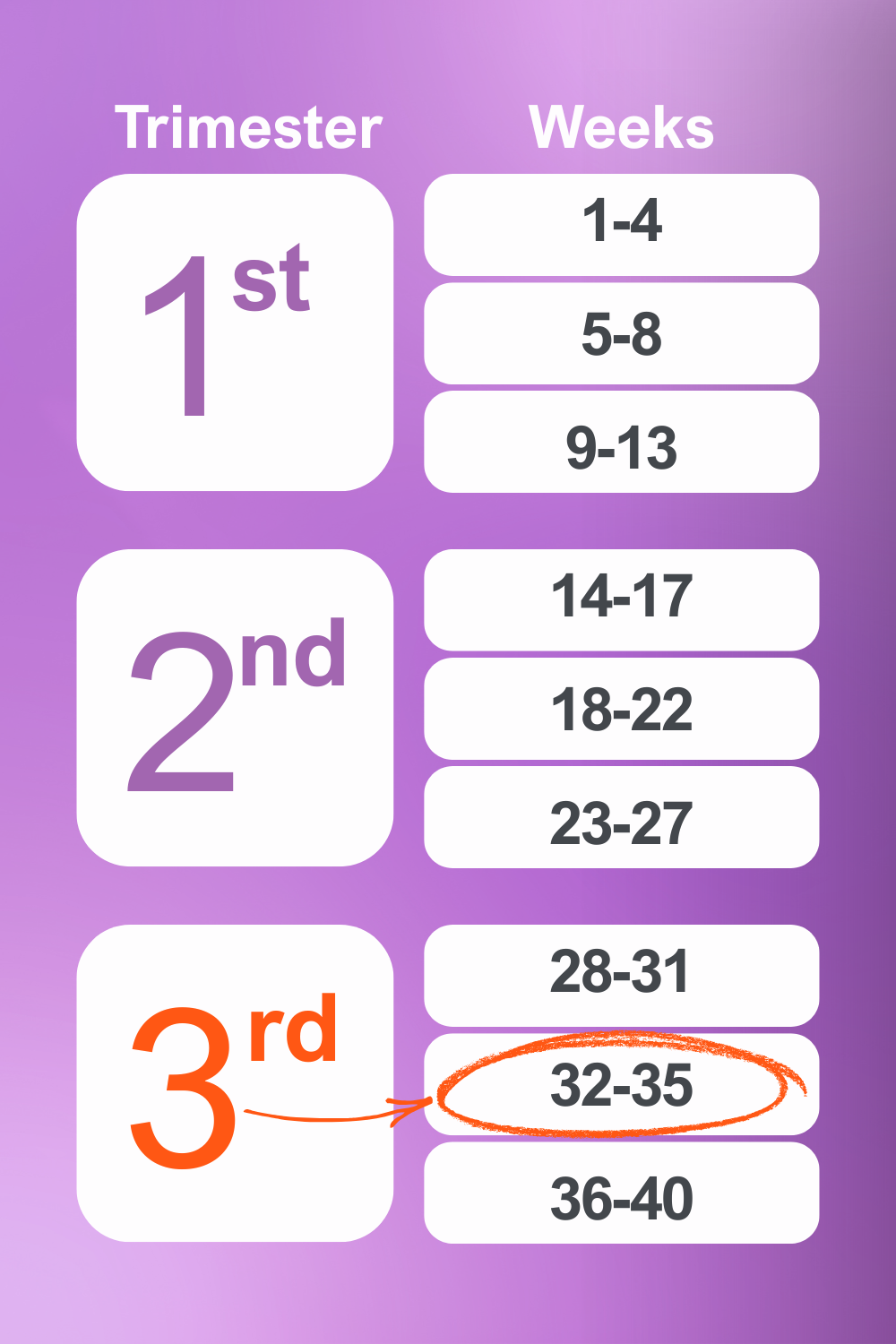
34 Weeks: Central nervous system and lungs mature further; many late preterm babies can feed and breathe with less support.
Summary:
At 34 weeks pregnant, your baby’s central nervous system and lungs are continuing to mature, making it increasingly possible for them to breathe and feed with minimal support if born early. Many late preterm babies at this stage can regulate their body temperature and begin practising sucking and swallowing. The physical demands of pregnancy are more noticeable as fatigue, breathlessness, and pelvic pressure may intensify as the baby grows and settles lower in the pelvis. You might also experience more frequent Braxton Hicks contractions, as your body is actively preparing for labour, even if birth is still a few weeks away.
At 34 weeks pregnant, your body is preparing intensively for birth, and you may notice increasing physical discomfort. You might feel more pelvic pressure, back pain, and swelling in your hands and feet, especially in warmer weather. Braxton Hicks contractions may become more frequent, and sleeping comfortably can be a challenge. Using pillows for support and sleeping on your side is recommended to reduce the risk of stillbirth.
If you're Rh-negative, you may receive an Anti-D injection around this time to protect future pregnancies. It's also important to watch for signs of pre-eclampsia, such as severe headaches, vision changes, or sudden swelling, and report them to your healthcare provider immediately.
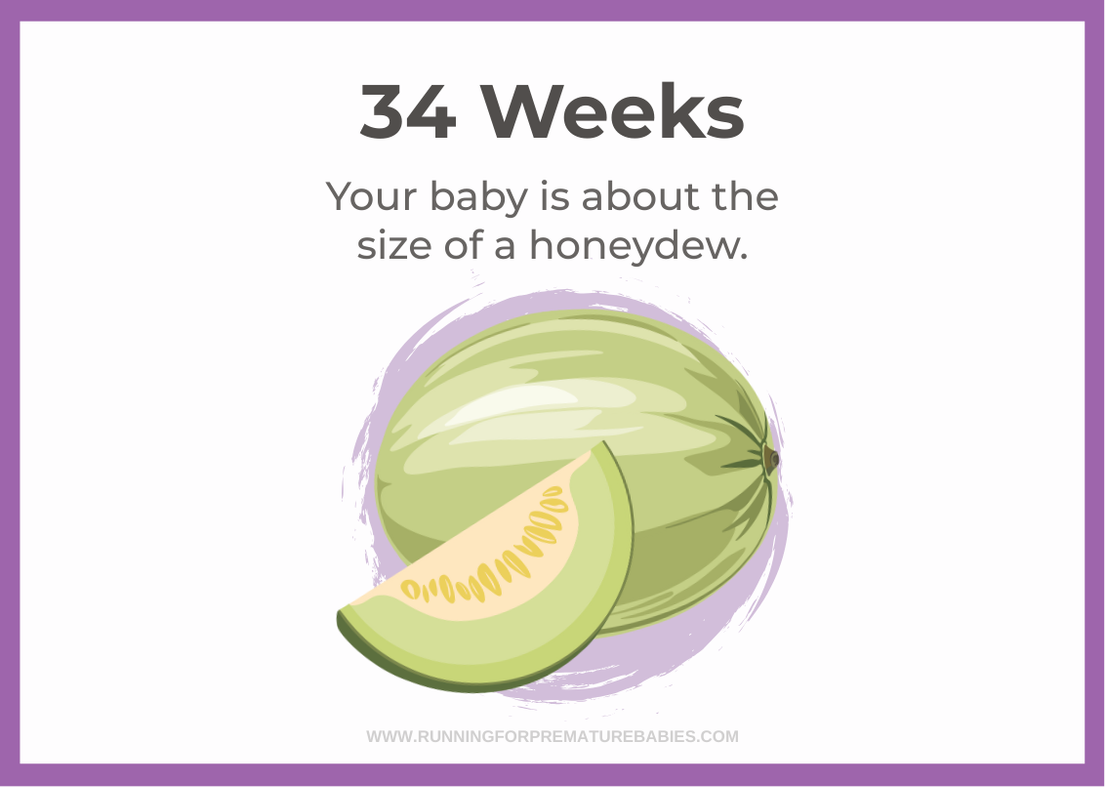
At 34 weeks pregnant what is happening with my baby?
At 34 weeks pregnant, your baby is continuing to grow and develop. They are about the size of a honeydew, measuring around 45-46 cm from head to toe and weighing approximately 2.1-2.3 kg. Their central nervous system and lungs are maturing, which means that if born now, many late preterm babies can breathe and feed with less medical support. Your baby is also practicing swallowing and digesting, taking in up to a litre of amniotic fluid daily, and their movements, like kicks and rolls, are stronger and more noticeable.
This information has been reviewed by Neonatologist, Dr John Smyth MBChB, FRACP FRCPCH.
See FAQs Below
Get Involved
Run with us
Donate
Join the Premmie Marathon Challenge
FAQs
At 34 weeks is my baby fully developed?
At 34 weeks pregnant, your baby is not yet fully developed, but they are getting very close. While their lungs and central nervous system are maturing, they may still need some support if born at this stage. However, many late preterm babies born at 34 weeks can breathe and feed with less medical assistance compared to those born earlier.
Can I breastfeed if my baby is born 34 weeks?
Yes, you can breastfeed if your baby is born at 34 weeks, though it may require some additional support and patience. Babies born at 34 weeks are often able to have some breastmilk directly from the breast, but they may tire quickly and only manage short feeds at first. Breastfeeding is a learned skill for both mother and baby, and premature babies may take weeks to fully develop the coordination needed to suck, swallow, and breathe effectively during feeds.
In the meantime, your baby can receive expressed breastmilk via a feeding tube or bottle. Your breastmilk is especially beneficial for premature babies as it contains higher levels of protein, fat, and protective enzymes like lysozyme, which help with growth and immunity. Expressing milk soon after birth and regularly (every 2–4 hours) helps establish and maintain your supply. Support from lactation consultants, midwives, and NICU staff is key during this time.
Tips for successful breastfeeding a late preterm baby:
- Start expressing colostrum before birth (discuss with your midwife).
- Skin-to-skin contact right after birth helps regulate feeding reflexes.
- Ask to see a lactation consultant early in hospital.
- Pump regularly if your baby can’t latch consistently.
- Track feeds and weight gain with NICU support team.
At 34 weeks, what position should my baby be in?
At 34 weeks pregnant, your baby is likely moving into the head-down position, which is the ideal posture for birth. While not all babies are in this position yet, many begin to settle lower in the pelvis around this time. If your baby is still breech (bottom or feet first), there’s still time for them to turn naturally. Your healthcare provider will monitor their position and may discuss options like an External Cephalic Version (ECV) later in pregnancy if needed. An ECV is a medical procedure used to try to turn a baby from a breech (bottom-first) or transverse (sideways) position into a head-down position before labour begins. This is typically offered around 36-37 weeks of pregnancy, when there’s still enough room in the uterus for the baby to move, but close enough to term that the baby is developed enough if labour starts early.
What happens during an ECVL:
- The procedure is usually done in a hospital setting.
- A doctor will use their hands on your abdomen to gently but firmly guide the baby into the correct position.
- You may be given a muscle relaxant to help your uterus stay soft and reduce discomfort.
- Ultrasound is used to monitor the baby’s position and heart rate throughout.
- The procedure typically takes a few minutes, and you’ll be monitored afterward to ensure everything is stable.
An ECV has a success rate of about 50-60%. ECV can significantly reduce the likelihood of needing a caesarean section for breech presentation. The procedure is considered safe, though there are small risks, including temporary changes in the baby’s heart rate, rupture of the membranes, or triggering early labour.
What should I pack in my hospital bag?
Here are some suggestions to pack in your hospital bag:
For You
- Pregnancy health record and birth plan
- Comfortable clothes: Oversized t-shirts, pyjamas, day clothes, slippers, warm socks
- Toiletries: Toothbrush, toothpaste, face wash, soap, shampoo, conditioner
- Undies, maternity sanitary pads or period-proof underwear
- Breastfeeding-friendly tops, maternity bras, and breast pads
- Lip balm, water bottle, snacks
- Items for comfort: Pillows, blankets, music, essential oils, TENS machine
For Your Baby
- Nappies
- Singlets, socks, tops, bottoms
- One-piece suits
- Large cotton or muslin wraps
Optional Comfort Items
- Bluetooth speaker for music and playlists
- Aromatherapy oils
- Phone charger
- Camera or diary
Related reading:
First Trimester
What to expect when you're 3-4 weeks pregnant
What to expect when you're 5 weeks pregnant
What to expect when you're 6-9 weeks pregnant
What to expect when you're 10 weeks pregnant
What to expect when you're 12 weeks pregnant
What to exprect when you're 14 weeks pregnant
Second Trimester
What to expect when you're 18 weeks pregnant
What to expect when you're 20 weeks pregnant
What to expect when you're 22-23 weeks pregnant
What to expect when you're 24 weeks pregnant
What to expect when you're 26-27 weeks pregnant
Third Trimester
What to expect when you're 28 weeks pregnant
What to expect when you're 29 weeks pregnant
What to expect when you're 30 weeks pregnant
What to expect when you're 32-33 weeks pregnant
What to expect when you're 34 weeks pregnant
What to expect when you're 36 weeks pregnant
What to expect when you're 37 weeks pregnant
What to expect when you're 38-40 weeks pregnant
Disclaimer: This information by Running for Premature Babies Foundation is educational and informative in nature and is not medical advice or a healthcare recommendation. For further information, please seek professional medical advice from a qualified healthcare provider.
References:
Pregnancy, Birth and Baby. (n.d.). Pregnancy at week 34. Australian Government Department of Health and Aged Care. https://www.pregnancybirthbaby.org.au/pregnancy-at-week-34 Retrieved 28th September 2025
Raising Children Network. (n.d.). 34 weeks pregnant. https://raisingchildren.net.au/pregnancy/week-by-week/third-trimester/34-weeks. Retrieved 28th September
Raising Children Network. (n.d.). Breastfeeding premature babies. https://raisingchildren.net.au/newborns/premature-babies-sick-babies/breastfeeding/breastfeeding-premature-babies. Retrieved 28th September 2025
Healthdirect Australia. (n.d.). Elective caesarean section. https://www.healthdirect.gov.au/surgery/elective-caesarean-section . Retrieved 28th September 2025